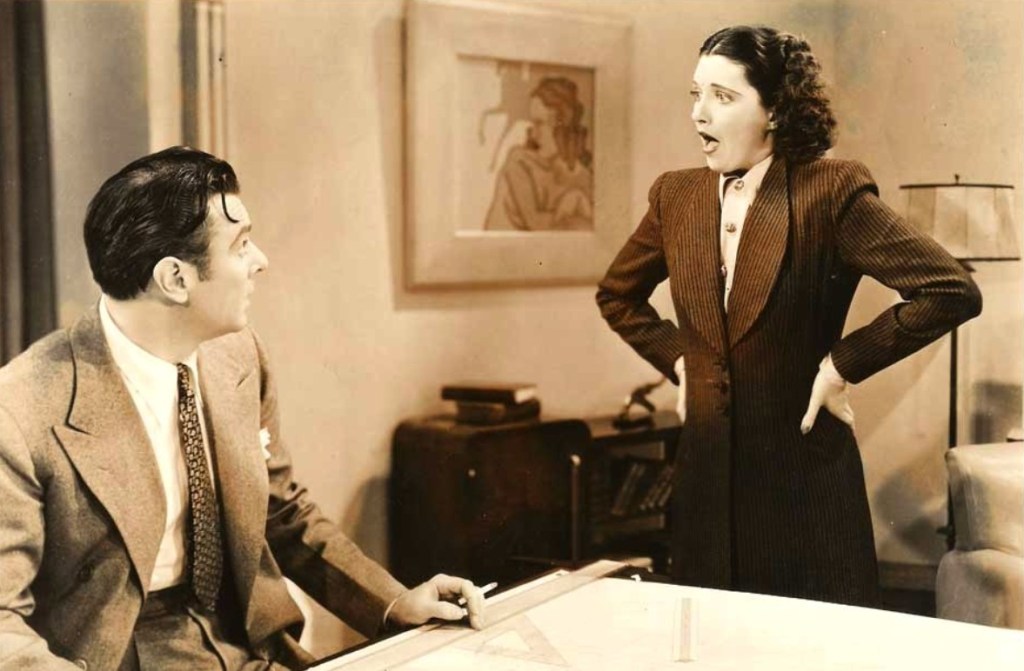
“Why, I’ve brought down the house in places no one ever heard of.”
As great as 1937’s Confession was, ironically, it also happened to be the film that triggered a series of events that would lead to Kay Francis’ film career being professionally sabotaged, her disillusionment with the Hollywood system leading to declarations of imminent retirement, and eventually, her stop-and-start work in the 1940s, which would ultimately be disrupted by the outbreak of the Second World War.1
Directed by Joe May, Confession is one of her last great films, a melodrama of the highest order, and quite possibly the Mt. Everest of all the Kay Francis weepies. It’s also the closest thing to seeing Kay Francis in a “classic” Josef Von Sternberg picture. A remake of the Pola Negri German expressionist film, Mazurka (1935) the frustratingly fastidious May was intent on recreating that earlier film shot-for-shot. To the cast and crew’s consternation, his constant companion was a hand-held stopwatch.
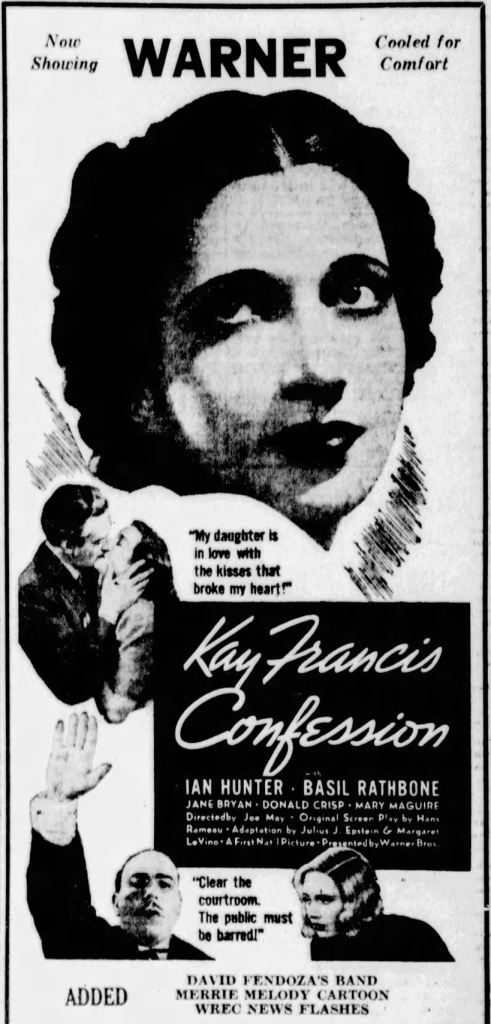
After the grueling production of Confession, Kay was tired of “suffering for her art,”2 and begged the powers that be at Warner Bros for lighter fare. In response, she got the political comedy, First Lady, which critics were kind to3 but fans unenthusiastic for. Inspired by Alice Longworth and Dolly Gann, the Jane Cowl stage success was originally planned as a star vehicle for MGM’s Norma Shearer, but when she turned down the loan-out to Warner Bros, the studio bought the script to placate Kay. It would be a recurring theme in Kay’s career with Warner Bros, playing the bridesmaid to screenplays planned for more respected stars (Shearer, Ruth Chatterton), but rarely playing the bride.
After the lackluster box office of First Lady ($424k gross on a $485k cost), studio head Jack Warner very publicly lost faith in Kay as one of his top stars, and began a very public campaign to run her out of her expensive contract. His plan of attack? Putting her through a barrage of quick and cheap ‘B’ pictures, often in roles that were downright insulting to an actress of her stature.
So obvious was Warner’s ruse that fans began to complain about the ignoble treatment of the studio’s top paid star (most reports say $5,000 a week). But Warner didn’t budge. If Kay wouldn’t quit of her own accord, he would force her to to fulfill her contractual obligations at a breakneck pace. It would be one of the busiest, and most dismal years as a studio actress.
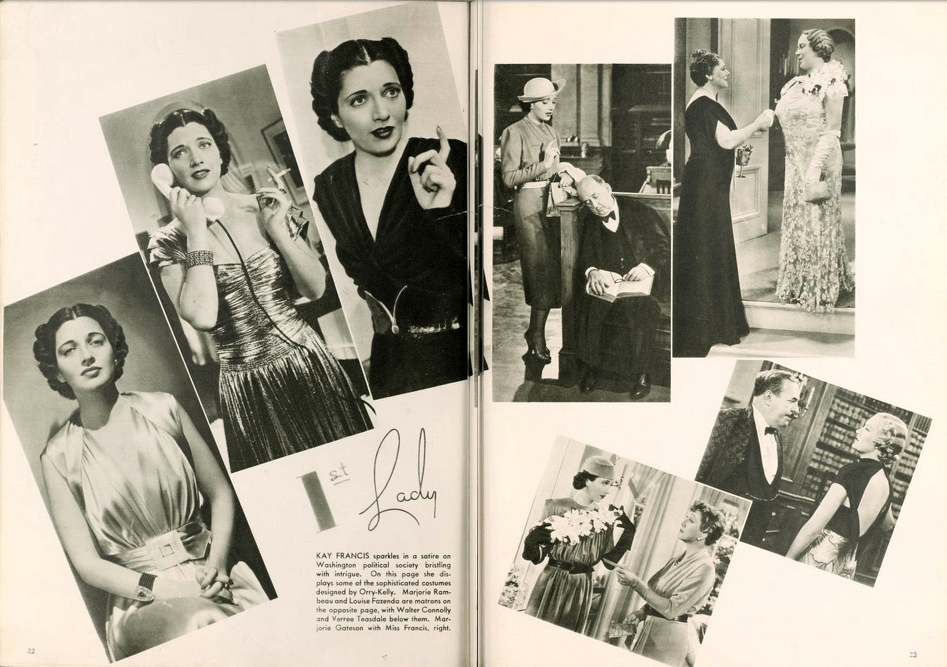
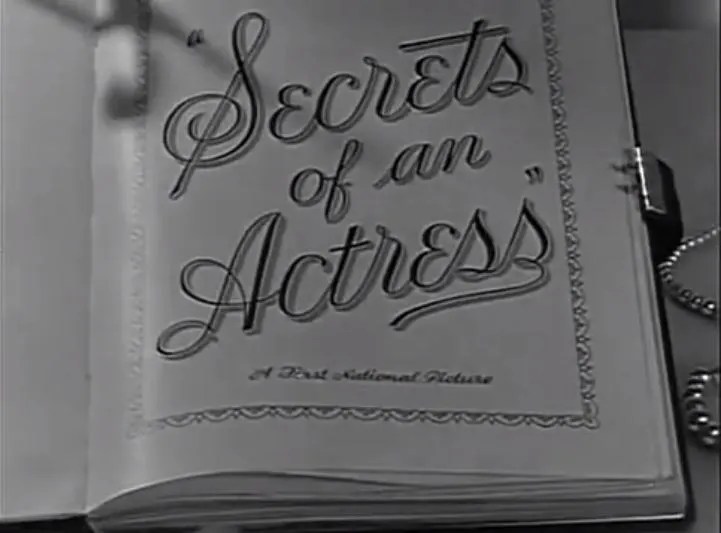
Under the headline “Kay Francis Gets a Bad Break Again,” Glenn C. Pullen at The Plain Dealer wrote about Kay’s follow-up, Secrets of An Actress:
“For Kay Francis, the year of 1938 will be red-lettered in her diary as her unlucky year. She was put in the doghouse by her home studio as the result of a temperamental spat, then further punished by being tossed the season’s ripest pieces of tripe for her last three vehicles. Here she is given another bad break…which I am afraid won’t help her chances in Hollywood after she quits the Warner lot—with a great sigh of relief.”4
In The Evening Star, critic Chris Mathisen called the film her “penultimate chore” for Warner Bros.5 Throughout her career, Kay was nothing if not a trooper, and despite her unhappiness, she never shirked what she saw as her duty as an actress. Thus, we have Secrets of an Actress, certainly not a great film, maybe not even a good film, but definitely better than the other films released that year (My Bill and Women Are Like That being two of her absolute worst).
It’s best to remember that even in Kay’s darkest times, in her bitterest battles with the studio (which she called her “great struggle”), she held her head high, showed up on time to work each day, and was an utmost professional. According to Stuart Jerome’s book, Those Crazy Wonderful Years, after completing Women in the Wind (1939), the final picture of her Warner Bros contract, something special happened as she strode through the auto gate for the very last time. The cop at the station “performed an unheard-of-gesture to an actor: He saluted Kay Francis.”6
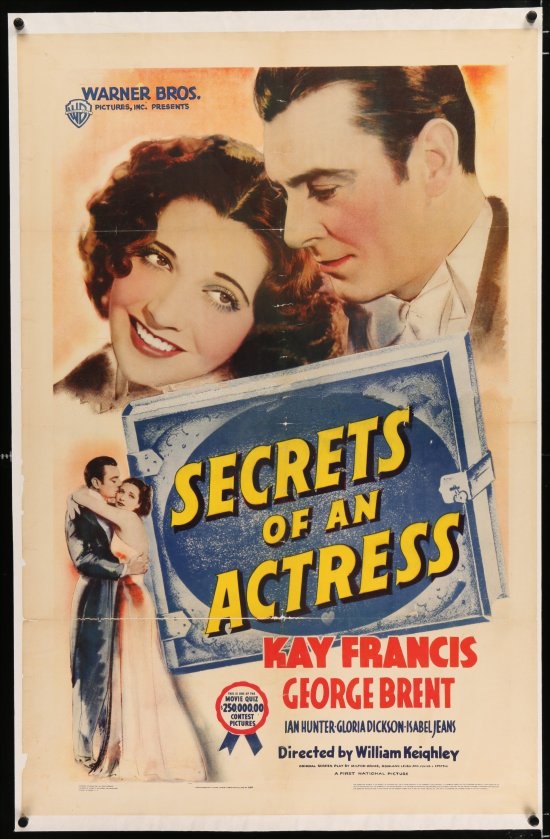
Secrets of an Actress poster, lobby cards and publicity stills 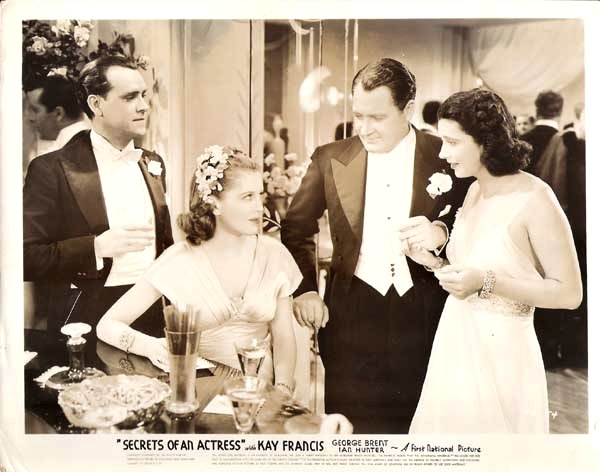
Secrets of an Actress poster, lobby cards and publicity stills 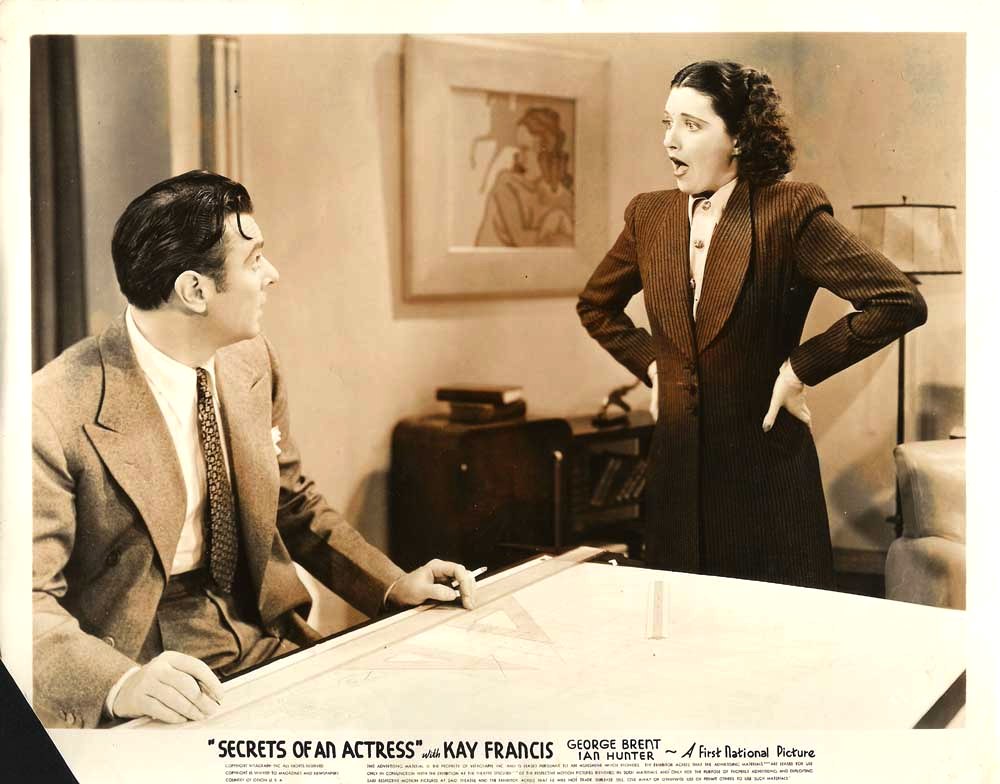
Secrets of an Actress poster, lobby cards and publicity stills 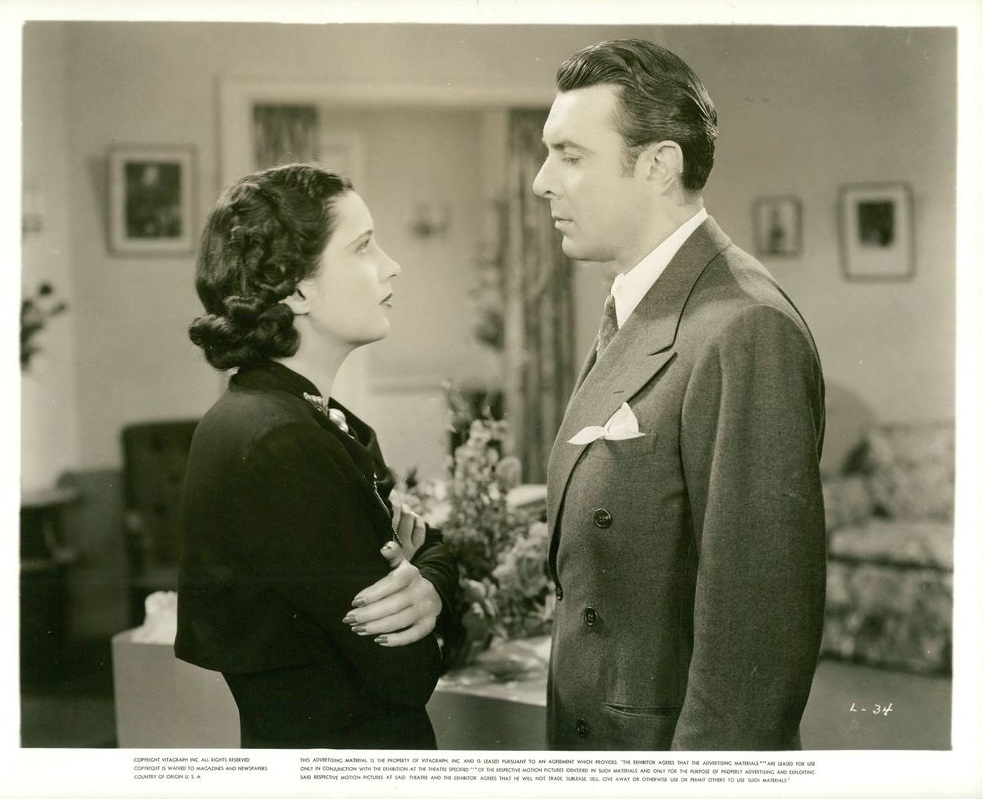
Secrets of an Actress poster, lobby cards and publicity stills 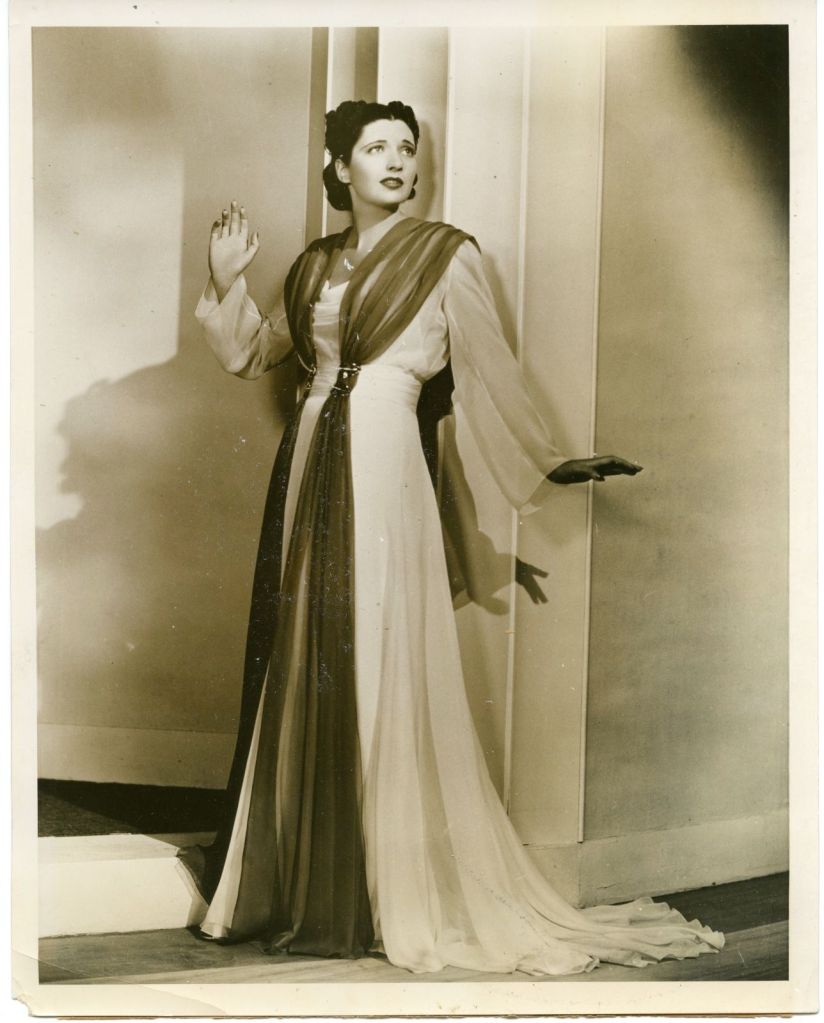
Secrets of an Actress poster, lobby cards and publicity stills
In Secrets of an Actress, Kay is once again paired with George Brent, in what would be their sixth and final picture together, but the script can’t muster any chemistry between the two. They’ve already been here, so many times before. It doesn’t help that said script seems to be poking fun at Kay’s character being thirty-years-old, an age that is apparently closer to ninety than twenty in show business years. Still, while there may not be any grand “secrets” revealed, the story has echoes of Kay’s real life that make it one of her more fascinating from the period.
Critic Chris Mathiesen, in his article for the Evening Star entitled “Kay Francis’ Film Helps Write Finis,” is correct when describing the script as being pulled from Warner’s “file cabinet containing time-testing plots in order to speed the liaison [with Kay] to its end,”7 but knowing Kay’s childhood on the theatrical circuit with her mother, and the road show grind she was really subjected to before achieving name-in-lights success (like her character in the film), it all comes across as more poignant than expected. To be fair, I’m also a sucker for any Old Hollywood reference to Fargo, North Dakota as an important stop on the travelling theater circuit.8
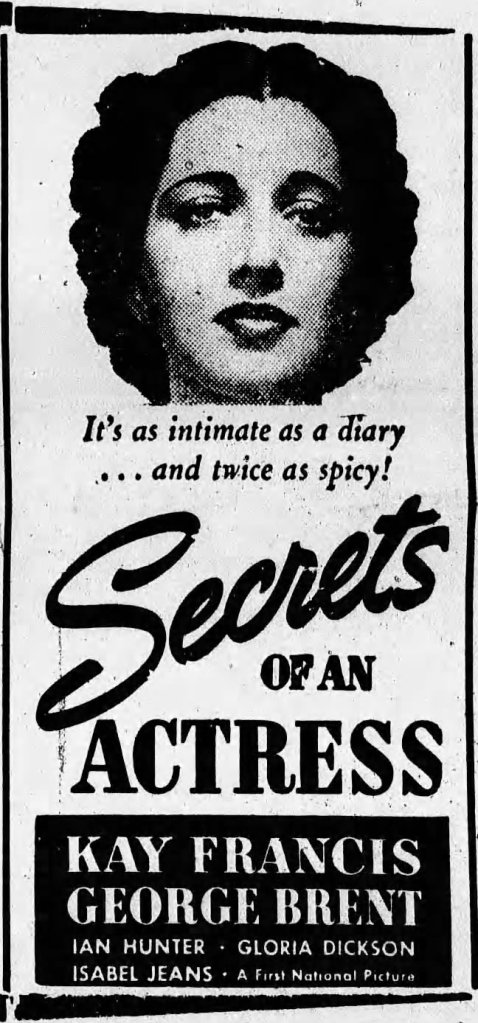
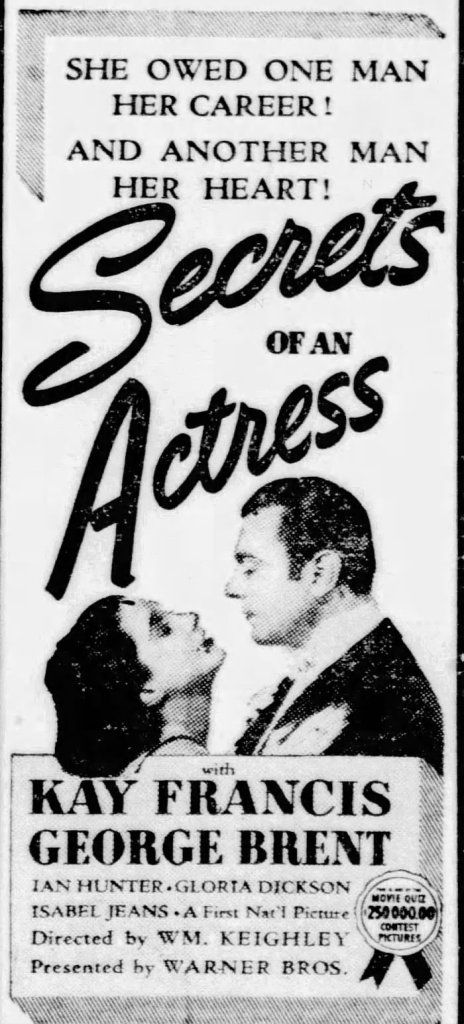
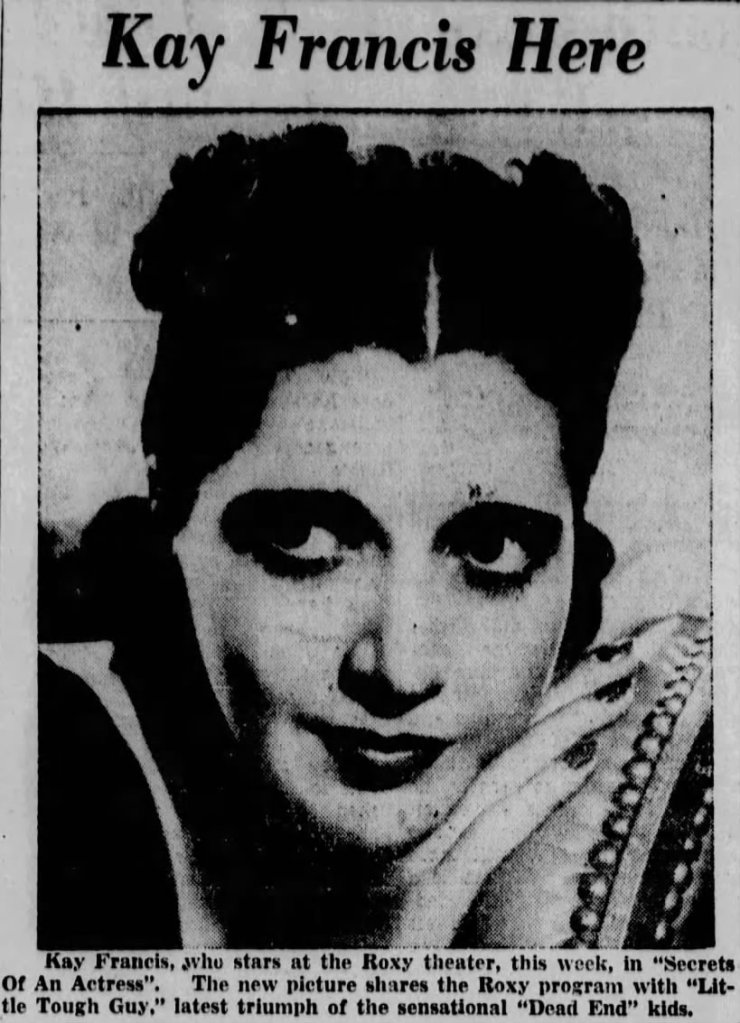
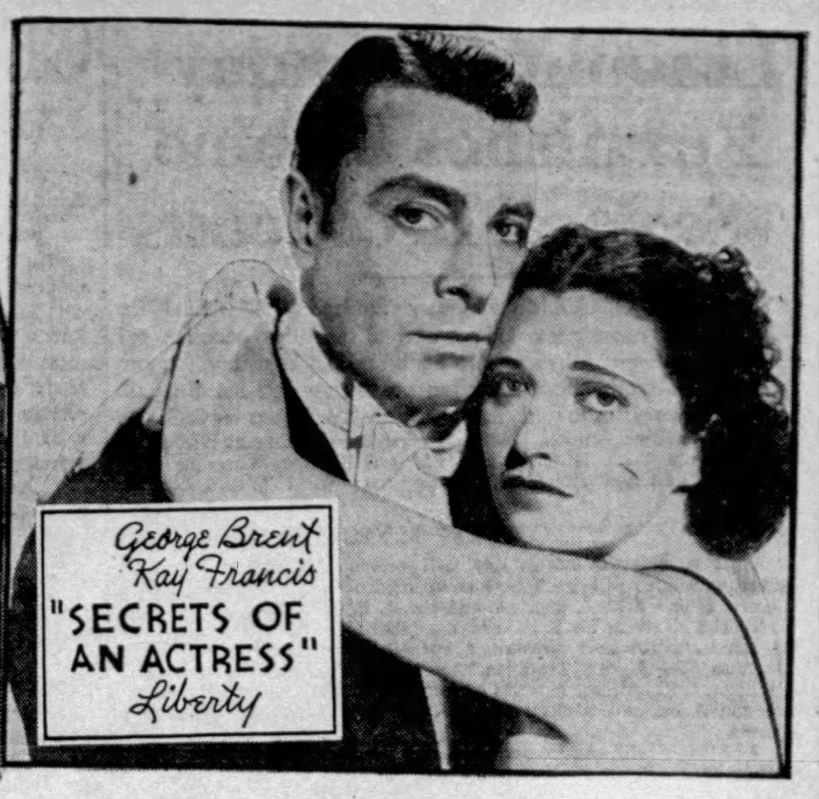
This being a familiar, even personal role for Kay, it seemed to spark something long dormant in her. With the writing on the walls, there was no guarantee she would ever have another opportunity to perform a part so close to her heart again. After her planned marriage in October 1938 to Baron Raven Erik Barnekow, Kay told the press she would retire, only to make an occasional picture if the “right story” turned up and if the “public wishes.” She was already preparing to be forgotten.
Most reviewers could barely muster anything nice to say about the production besides it being a frivolous, yet glamorous waste of 70 minutes. But some astute critics, like those at The Morning Union saw a change:
“Criticism has apparently penetrated the skin of Kay Francis for she does a better job in Secrets of an Actress…than she has in any other recent picture. She puts herself into the role with real zest and gives a highly creditable performance.”9
The film itself won’t change your life, but it won’t make you want to claw your eyes out either (see: My Bill). The three veterans, Francis, Brent and Ian Hunter, go through the motions, playing out what Richard G. Moffett at The Florida Times-Union described as “very poor material…a plot that has been worked over many times.”10 Maybe the glut of Francis films hitting the big screen that year had him feeling as tired as our cracked actress, going on to specifically call out Kay’s habit of “entwining her fingers and folding her arms, both stock mannerisms which are featured in nearly all of her pictures.”11
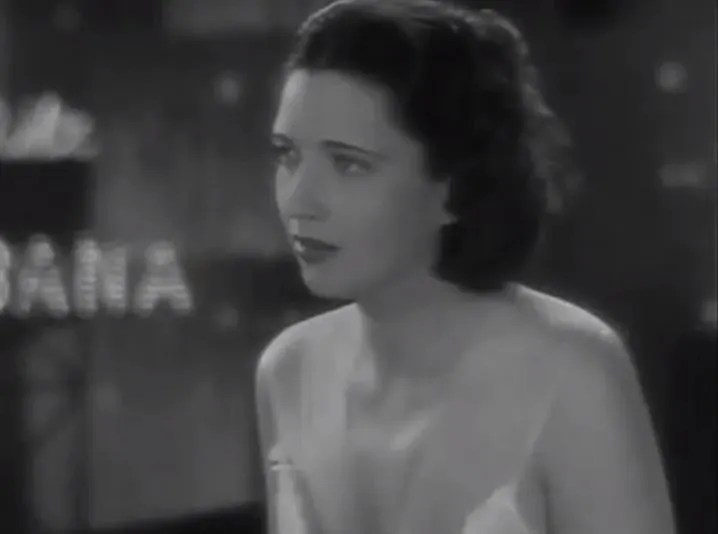
What everyone seemed to agree on is that “the perpetually tipsy Isabel Jeans…steals most of the amusing scenes from under Miss Francis’ nose”12 and that Orry-Kelly’s kimonos and frocks look fabulous.13 One critic, Mr. E.B. Radcliffe at The Cincinnati Enquirier, was maybe paying a little bit too much attention:
“Make-up experts slipped up on the Francis vaccination mark. It stands out pretty sharply in several close-up shots. The mark is noticeable enough to cause audience comment.”14
Kay may have been marked up physically, and her career with Warner Bros marked for completion, but things would look a little brighter come next year, with Kay finally freed from her contract and excited by the possibility of becoming a part-time, freelance actress. The first thing she would do? Get her ears pierced.
Footnotes:
- The latter would also lead to some of her most personally fulfilling work, but that’s a story for another article. ↩︎
- “For picture after picture I’ve had to shed buckets of tears over my little child or my poor, thwarted lover or something. I’m sick to death of crying.” Rooks, Lyle, The Atlanta Constitution, “Misunderstood Lady,” May 23, 1937 ↩︎
- “First Lady ought to do a lot to put Kay Francis back in the good graces of her fans. It’s the first picture that has been given her in months that was worth sitting through and she plays the role charmingly.” The Houston Chronicle, Dec 19, 1937 ↩︎
- Furthermore: “Kay’s performance is limited to registering emotional pain via her luminous eyes, through too many huge close-ups; waving her eloquent hands and expressing gayety with a very fixed smile. She does look beautiful. But charm is an overworked quality when an unimaginative director makes the action so synthetic, not lending his star any support.” The Plain Dealer, Sat, Sep 10, 1938 ↩︎
- The Evening Star, Sept 24, 1938 ↩︎
- Jerome, Stuart, Those Crazy, Wonderful Years, pg. 40 ↩︎
- Evening Star, Washington, District of Columbia, September 24, 1938
↩︎ - This author was born in Bismark, North Dakota, but raised in Minneapolis, Minnesota, so the border town Fargo holds a special place in my heart. ↩︎
- The Morning Union, Sep 08, 1938
↩︎ - The Florida Times-Union, Sept 30, 1938 ↩︎
- Ibid ↩︎
- The Plain Dealer, Sep 10, 1938
↩︎ - “Miss Francis’ gowns, as usual, are gorgeous.” The Pittsburgh Press, Oct 15, 1938
↩︎ - Furthermore, rude: “The Francis tendency to pronounce “r’s” as “w’s” has not been eliminated. Life probably still is a ‘mewwy-go-wound’ in her language.” The Cincinnati Enquirer, Sept 9, 1938
↩︎
 Gentry Austin