
“You must be careful. There are things that should never be given up. You must persevere.”
— Humbert Humbert in Vladimir Nabokov’s Lolita
“What do you do at night to make it stop hurting?”
— Debbie in Mark Haggard’s The All-American Girl
Opens on our happy-go-lucky, titular “girl” leaving school at bell ring, hugging her boyfriend, and waving at all her car-bound admirers as she walks down the street clutching her books to her chest. One more day and she’ll be a senior. After a frank kitchen discussion with her mother about dressing sexy and going too far with boys, Debbie (perfectly cast Peggy Church) writes in her diary about the future: the end of the school year, the graduation of her boyfriend, Bobby, and how much she’ll miss him when he leaves for Guatemala for the summer where he’s volunteering as part of a humanitarian aid mission to combat poverty. She also details her personal code of sexual ethics: never undress completely in front of a man, and no penetrative sex before marriage—everything, and I mean everything else is fair play. She lays back and touches herself, thinking about her Saturday night date with Bobby, and the going away present she has planned for him.
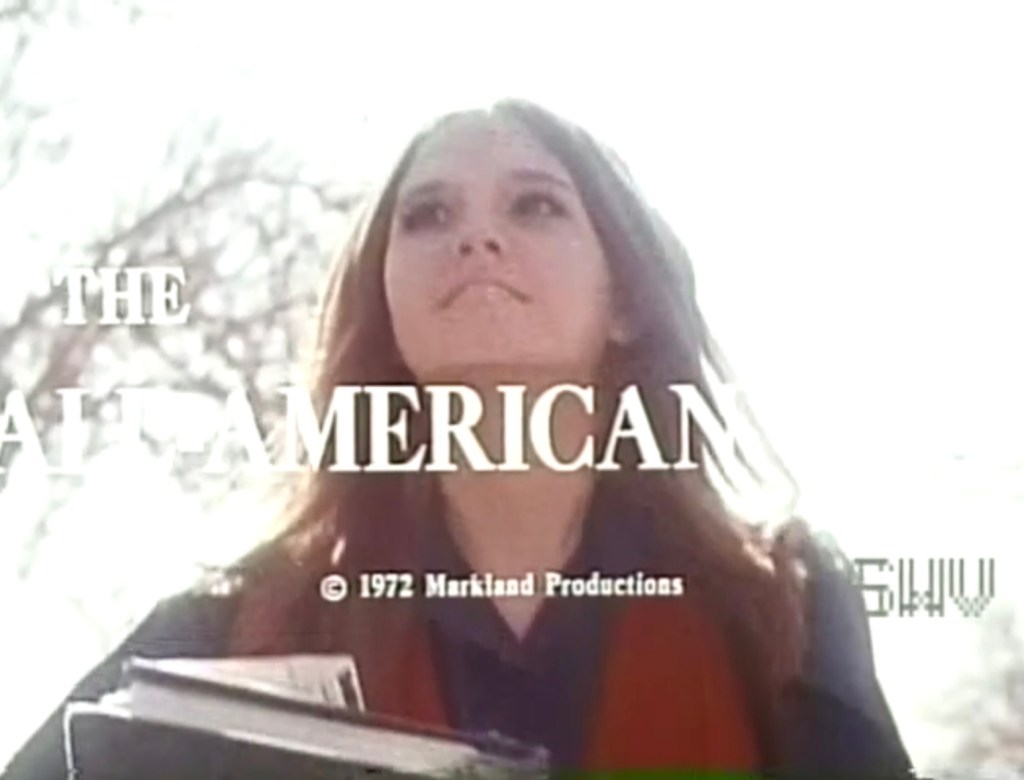
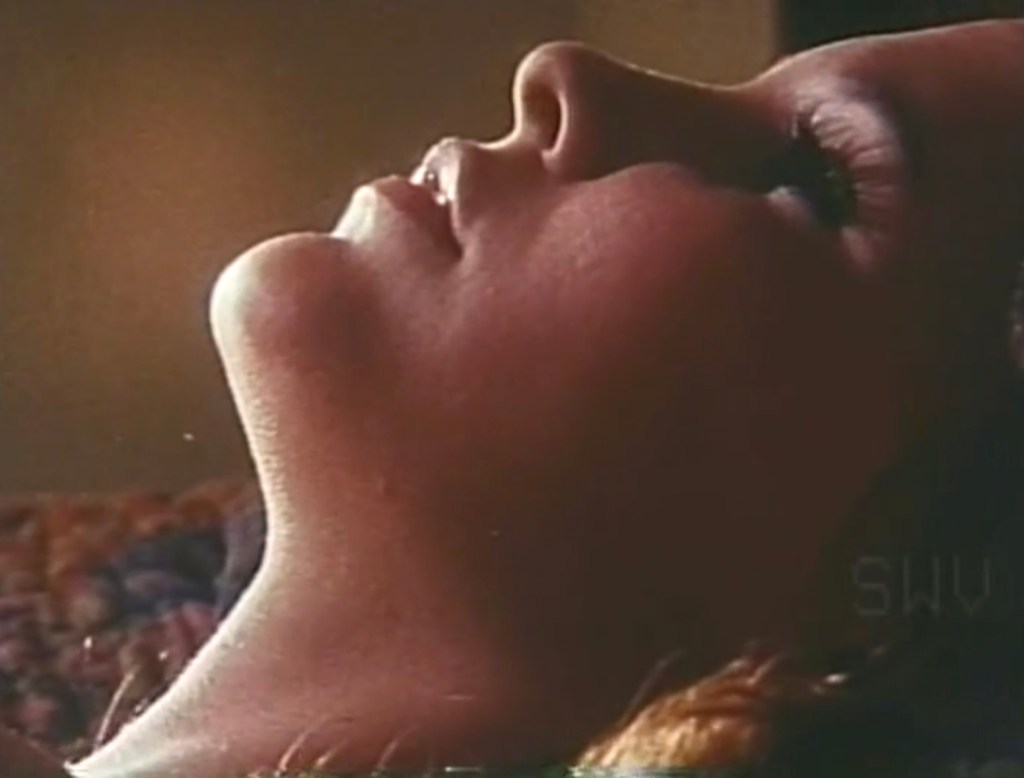


”I’m going to make you happy so you don’t forget your girl”
What follows is—checks my notes—the greatest softcore mutual masturbation scene ever recorded to film. But let me step back and provide some necessary context. The All-American Girl was written and directed by Mark Haggard, an uncommonly talented and under-recognized figure in 1970s sex films, previously directing the fantastic apartment-set lesbian drama, The Love Garden, and flirting with the mainstream with his Rated R sex comedy, The First Nudie Musical. In the middle of all that is All-American Girl, executive produced by hardcore pornography pioneer Bob Chinn, who was looking for a “safe” project that wouldn’t get him in trouble with the law, but would still provide the necessary sexual spark to please a 1973 audience that was looking for more and more explicit content.



“Let me do the work.’
It’s a film that goes as far as legally possible for the time, but working within these restrictions actually makes it all the more erotic. What makes it work so well is its frank depiction of the lesser seen, messier aspects of experimental sexuality. I’m talking the tissues, the fluids, the fumbling rabid-ness of being young, dumb, and full of, well, you know. Debbie is a shown to be both a pre-Poison Ivy tease and neo-Juliette figure, her act of bored seduction of the boy across the hall she’s summer babysitting, and his sexually frustrated parents, borders on the psychopathic, especially if you view young Johnnie boy as being high-functioning autistic, with her sex lessons seemingly offered as an act of well-meaning sex-ed, and an abuse of babysitting power. Debbie takes her code as far as it can go during a game of slave and master with best-selling erotic novelist Mark (Andy Mitchell), stripping down to near-nothing, only a pretty necklace keeps her from breaking her vow.



“Crazy little bracelet you got there. Did George Raft give it to you?””
“Who’s George Raft?”
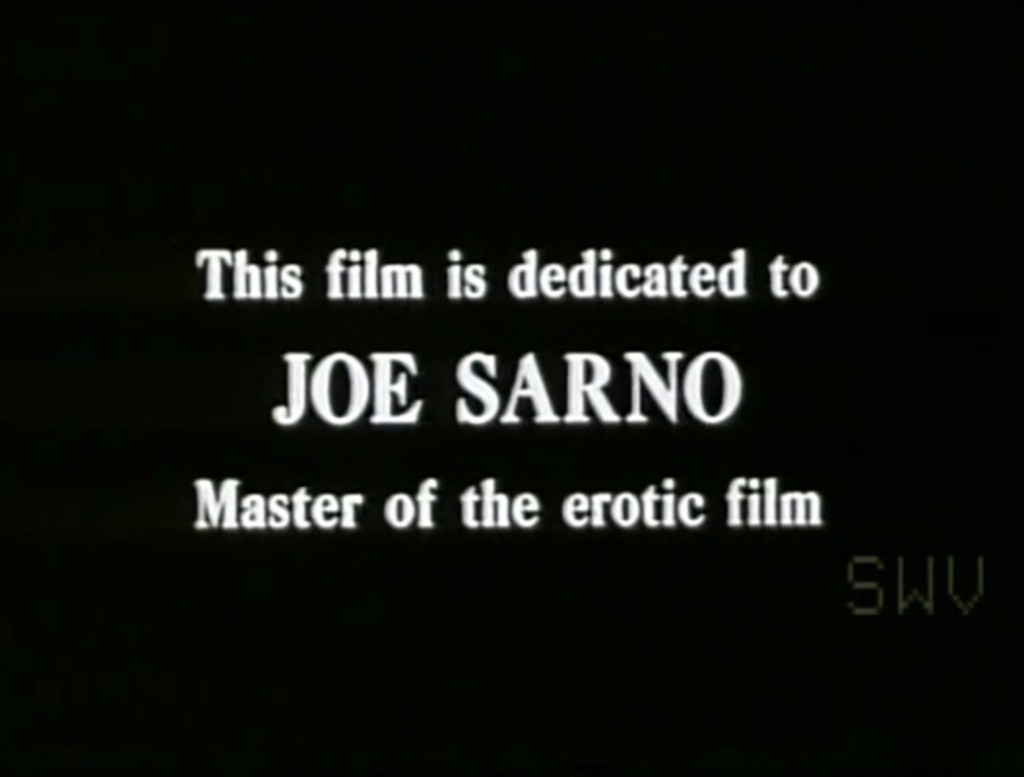
Those in the know, who have seen as much Joe Sarno as Mark Haggard clearly has, will see the subversion beneath the obvious titillation. In my opinion, it’s intended as a dark satire (the trailer makes this even more obvious), a look at suburban American sexual dysfunction with an eye as keenly vulgar as Todd Solondz’ Happiness, or Lou Campa’s Sock It to Me Baby. It might be a tough swallow for the uninitiated, but in my eyes, it’s a worthy contender for inclusion in America’s preciously seductive, girl-fixated canon, which, whether you like it or not, is part of our godly nation’s sicko DNA.
O say can you see, what she’s doing to me. Glory, glory, hallelujah!
 Gentry Austin