This is part five of the forgotten indie series. catch up on pervious entires:
part one / Part two / Part Three / part four
Intro: Taking a cue from the Forgotten Gialli film series put out by Vinegar Syndrome, which highlights movies from the Italian thriller subgenre that have fallen through the cracks, I’ve created my own indie-rock variety. As is the case with any form of art, what is considered “forgotten” depends on the audience, not necessarily the availability. This series will focus on albums put out around the early aughts, sometimes delving into the late 90s, but I hope to avoid anything beyond 2010, and earlier than 1990. Most of the records spotlighted will be from my personal CD collection.
Context:
Each album spotlighted below can be found on multiple streaming services. Based on current Spotify numbers, Pure Tone Audiometry has no song with more than 10k plays. Neither does Submariner. Violet has one. But enough about streaming metrics, this is about CDs.
Aarktica – Pure Tone Audiometry
(Silber Records, 2003)
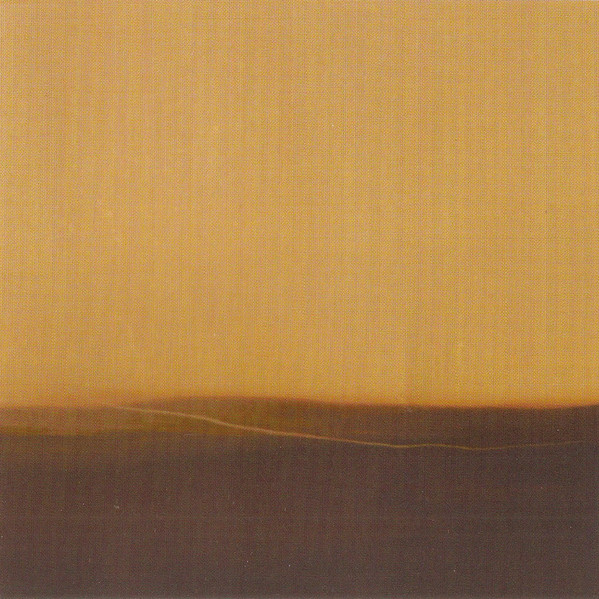
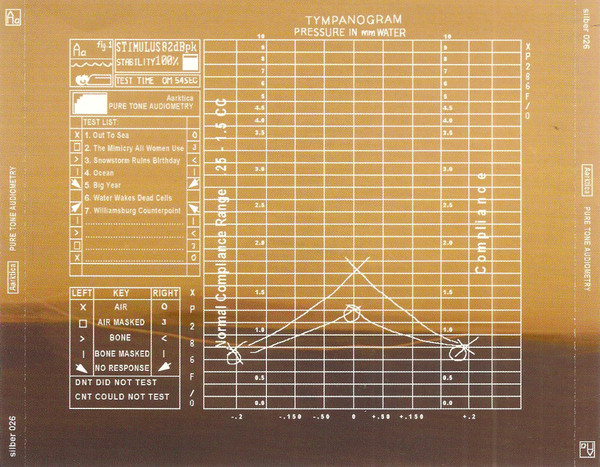
After two full-length releases and one extended play¹ of chilly, mostly voiceless drone and post-rock influenced organic ambient, half-deaf musician and student of Indian Classical Music, Jon DeRosa, opened up his sonic pallet for Pure Tone Audiometry, a seven track album furthering his move into pure singer/songwriter forms. It wasn’t new ground for DeRosa, who had been dabbling in folk-music through his Pale Horse & Rider project, but it marked a seismic shift for Aarktica, not only pushing his own voice to the forefront, but that of harmonist Lorraine Lelis (Mahogany) as well. Pitchfork called it “cold, pure, and almost inescapably tranquil.” Allmusic: “an ingenious balance between avant-gardist guitar soundscapes, neo-folk songwriting, and post-rock dreaminess.”
It’s an album greatly aided by the aforementioned Lelis’ voice, which adds another layer of softness to DeRosa’s soundscapes. Other hands on deck, namely, more members from the band Mahogany, as well as Charles Newman of Flare, and Hadley Kah of Escapade, bring additional instrumentation outside DeRosa’s scope to three of the album’s major tracks—”Ocean,” “Big Year” and “Williamsburg Counterpoint.” As opposed to previous releases where DeRosa’s fragile, emotionless tenor sometimes came off shaky, here he sounds more confident with it, further pushing it up in the mix and learning how to use it effectively as just another instrument in the mix. Subsequent releases, like 2007’s Matchless Years would find DeRosa further structuring his songs around the words rather than the music, but that melding of his ambient and songwriter instincts, for my money, was never stronger than on Pure Tone Audiometry.
¹ Per its origins as volume 18 in Darla Records’ “Bliss Out” series, Or You Could Just Go Through Your Whole Life and Be Happy Anyway sounds more like rushed, experimental sketches than fully realized songs (“Aura Lee” notwithstanding), and thus Pure Tone Audiometry should be seen as Aarktica’s second, true full-length album. In my opinion, anyways.
Video:
Lyric:
“Therapist is beautiful / The medicine is helping me / It’s gonna be a big year”
Recommended if you like (RIYL):
Guitar ambient, long drones to stare at the ocean to, melodic sine waves
The Dead Science – Submariner
(Absolutely Kosher, 2003)
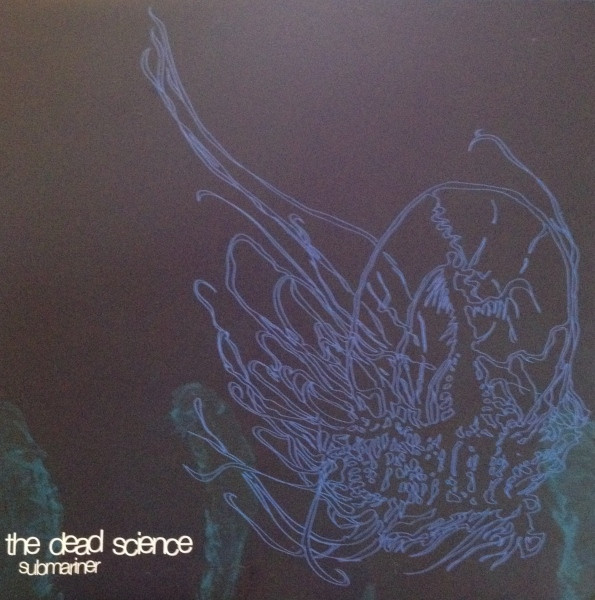

I first heard of The Dead Science through their connection to band member and bassist Jherek Bischoff, who had recently acted as touring player and studio musician for Xiu Xiu on their Chapel of the Chimes EP and A Promise LP, and would go on to work further with the band on their Fabulous Muscles breakthrough. Much of the marketing by Absolutely Kosher Records capitalized on this connection, which was apt. Both bands shared a love for the experimental, had hushed-voice vocalists, and played music that many would describe as “difficult.”
But whereas Xiu Xiu where lyrically more influenced by child trauma and the intensely personal writings of novelist Dennis Cooper, The Dead Science skewed toward the more cinematically noir and macabre—more Nick Cave than Joy Division, more Jean Renoir than Todd Solondz. One Discogs user described it as “Radiohead with a great jazz drummer and upright bassist,” and I think that’s a fair assessment, though The Dead Science works more as an album band, with the tracks themselves standing out less than the large scale alt-rock outsider anthems of that aforementioned band. There’s nothing to sing along with here, but definitely something to get lost in. To get drowned by.
Video:
Lyric:
“The diabolical plot cannot be fought until it’s unwound”
RIYL:
Jazz-inflected lounge rock, the scary side of sexy, Xiu Xiu without the screaming
Boy in Static – Violet
(Mush Records, 2007)

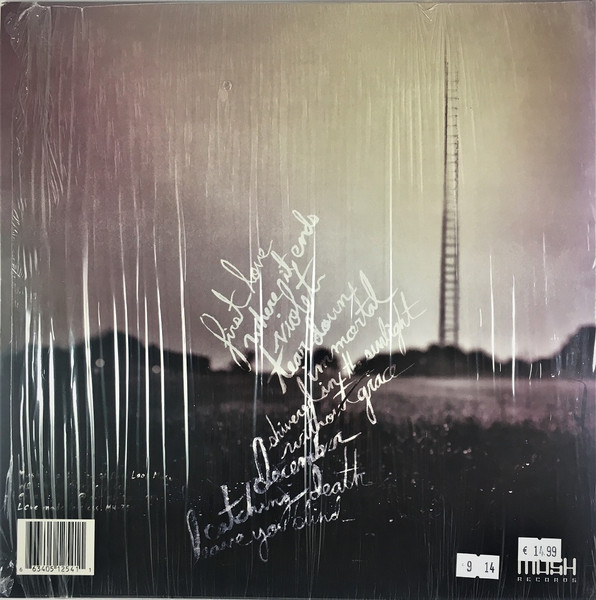
When Violet was first released, there were some critics eager to lump Alexander Chen’s mostly one-man band in with the neo-shoegaze scene, but the album had more in common with the burgeoning indietronica from Europe than the wall-of-guitar sounds from the mid-90s. It’s no secret that German band The Notwist was Chen’s favorite musical group, and acting as opener for them and rap/rock supergroup 13 + God in 2005 highly influenced his sophomore record. Another supergroup of sorts had also just released a blippy, bloopy pop album to great success, a little band called The Postal Service.
What I’m trying to say is: electronic indie pop with heart-on-the-sleeve vocals was en vogue, so it’s a surprise Violet didn’t make more of an impact. Maybe it had to do with a lack of press (no Pitchfork review), or Mush Records didn’t know how to market the band, the label was then still best known for putting out indie hip hop from cLOUDDEAD members and Aesop Rock. Or maybe it had to do with Chen’s lyrics not really connecting on the same level as say, a Ben Gibbard line. Take the prominent, repeated couplet from Violet‘s lead single, “Where It Ends”: “The first time that I learned I could make you cry / Was just like how I thought you looked inside.” It’s kind of clunky, and doesn’t really make a whole lot of sense. It’s definitely not something you’d sing at the top of your lungs in a small club or your dim bedroom.
Musically, though, it’s stronger, as Chen’s viola playing gives the record a unique layer within the dreampop haze. And the record still has its defenders, this many years later, myself, obviously, but also one Discogs user, proclaiming: “dreamy sad shoegazer of the highest order. This record is pretty much an overlooked masterpiece in that genre.”
Video:
Lyric:
“Remember how we started / Naive and brokenhearted / We watched the violet fade”
RIYL:
Morr Music with a pop edge, hazy bedroom pop to fall asleep to, that first Coldplay album
 Gentry Austin