
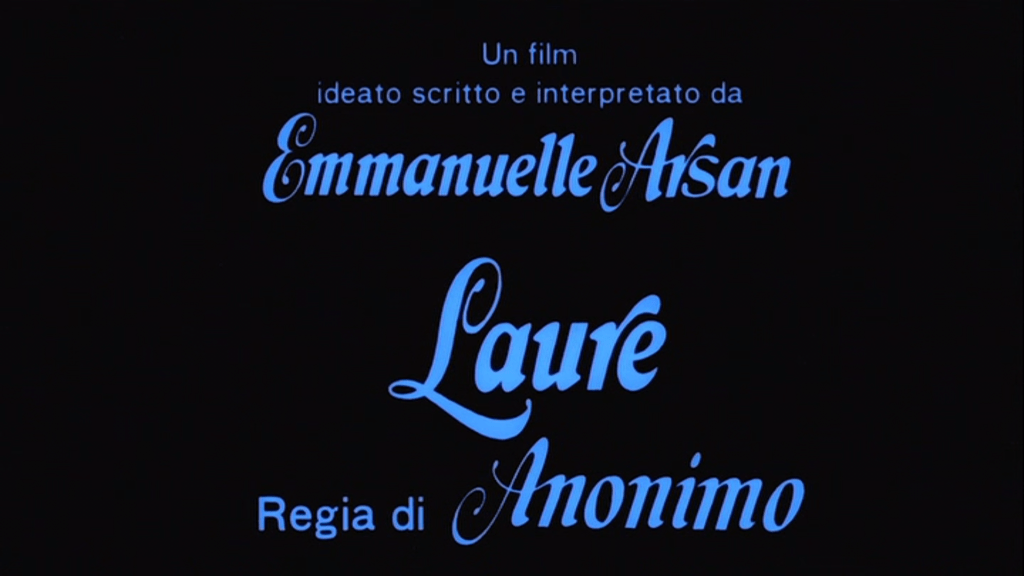
A film conceived, written and starring Emmanuelle Arsan
“I should like to see you do impossible things.”
— Nicholas (Al Cliver)
“There is a time for everything under the sun. Time to kiss and a time to refrain from kissing. Ecclesiastes chapter three, verse eleven.”
— Laure (Annie Belle)
“He has made everything beautiful in its time. He has also set eternity in the human heart; yet no one can fathom what God has done from beginning to end.”
— Ecclesiastes 3:11 (NIV)
When it first hit the underground book shops of France in the late 1950s, the author of Emmanuelle: The Joys of a Woman was a mystery. It wasn’t until its republication in the late ‘60s that the authorship was attributed to an “Emmanuelle Arsan,” ultimately discovered to be the pen name of Marayat Bibidh, a Thai-born beauty from an aristocratic family who married a French diplomat 14 years her senior. Years later, bolstered by new comments from Italian producer Ovidio G. Assonitis, critics and fellow authors who found it difficult to believe that Arsan1 (a woman) could be the sole author, believed they had enough evidence to retcon its authorship from Arsan to then-husband, Louis-Jacques Rollet-Andriane.
The truth, I suspect, is a mixture of fact and fiction: I believe Arsan and her husband collaborated in the writing of the novel, blending intimate stories from their hedonistic lifestyle in free-wheeling ’50s Thailand with erotic novella-style embellishments. I mention this messy authorship question because the belief that Jacques Rollet-Andriane is the true author of Emmanuelle exists today, despite the fact that much of what made the novel successful during its original release was that it was more appealing to imagine an attractive woman writing these salacious sex stories than an old French guy.
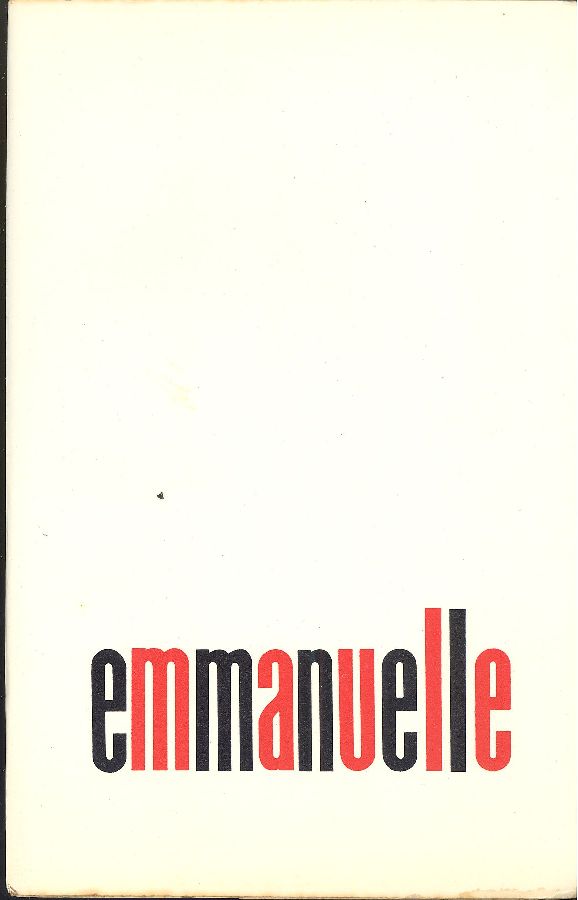
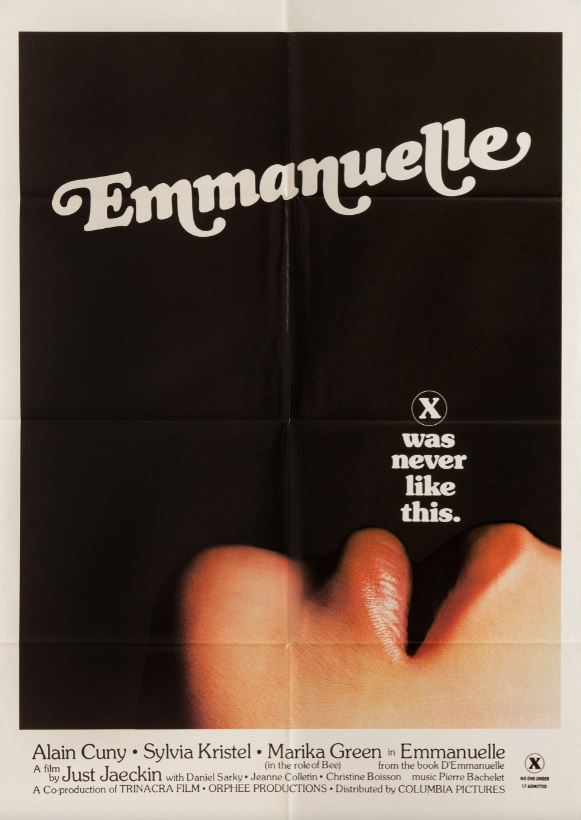
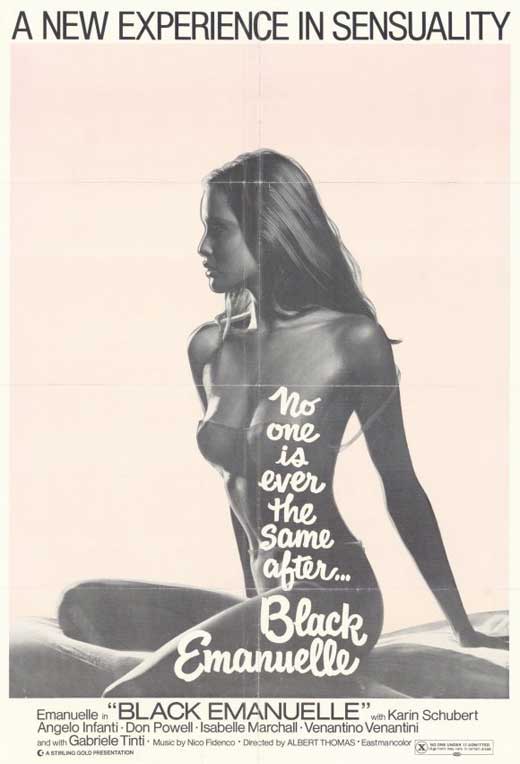
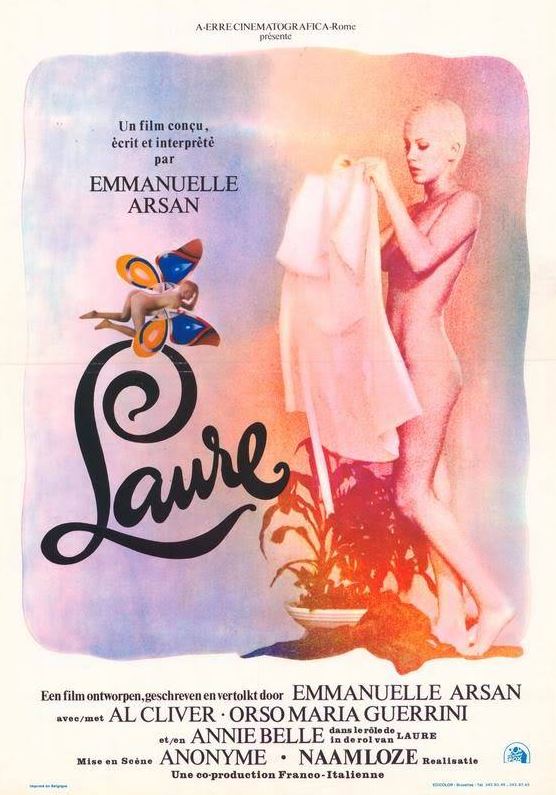
The other reason I recap this history of Emmanuelle is because it’s integral in understanding the complicated production of the the 1976 erotic film distributed by 20th Century Fox, Laure. But before we can understand Laure, we need to look at the first adaptation of the Emmanuelle novel, the French film of the same name, directed by Just Jaeckin and starring Sylvia Kristel. Hugely popular in France, and a surprise, crossover hit almost everywhere X-rated movies could be shown, the film spawned several direct sequels also starring Kristel. The Italian movie making machine, never one to let a mega hit go unexploited, created their own series of films under the “Black Emanuelle” label starring a beautiful Indonesian-Dutch model named Laura Gemser, who maybe coincidentally, more closely resembled the ”real” Emmanuelle (Arsan). Got all that?
So in 1976, after Laura Gemser had starred in, give or take, five Black Emanuelle (or adjacent) films, Arsan was maybe feeling like she should capitalize on the success of what Joe D’Amato was doing in Italy, and what the French were still milking even as the pornographic film was quickly making the softcore look obsolete. That is, write, direct and co-star in her own film—but bring the story back to its roots: sexual revolution not a thing for one, white French woman, but something bigger, something spiritual. Laure is the story about the complete abandonment of humanity, the loss of memory as freedom. Love and sexuality as a selfless, transcendent thing. It was also an opportunity for Arsan to promote her new book, a film tie-in that was published the same year and takes much of its dialogue directly from the film (or vice versa).2
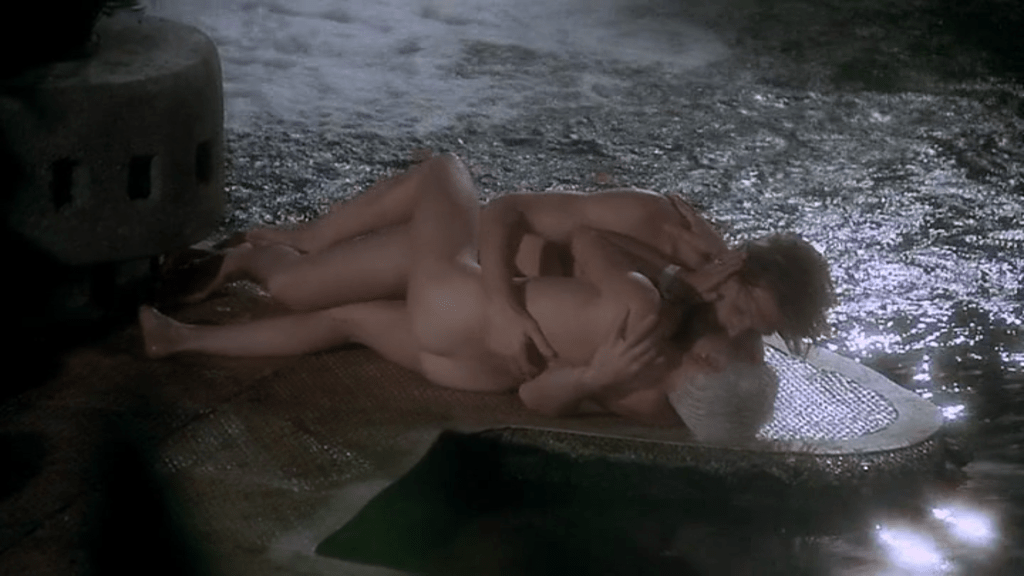
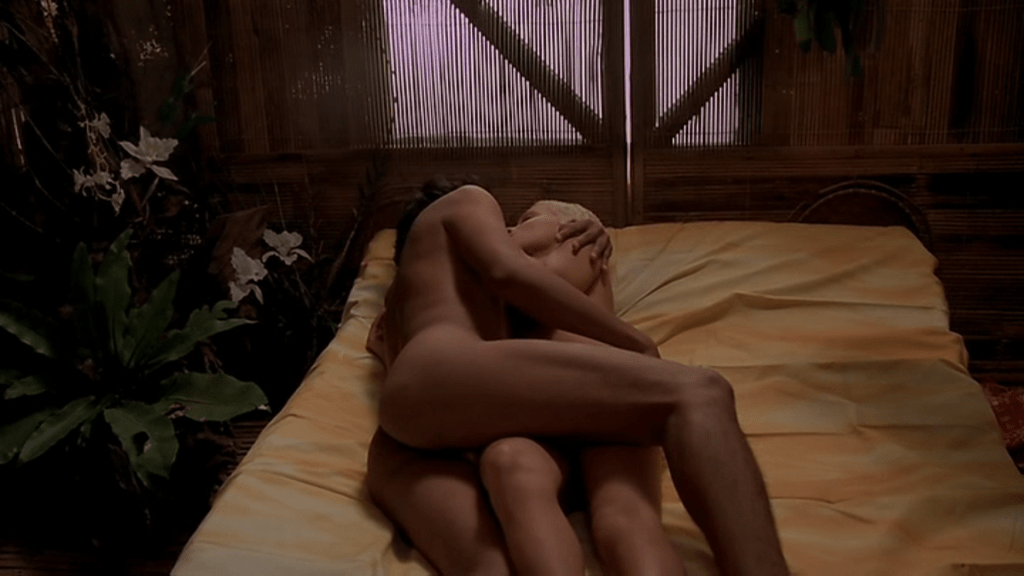
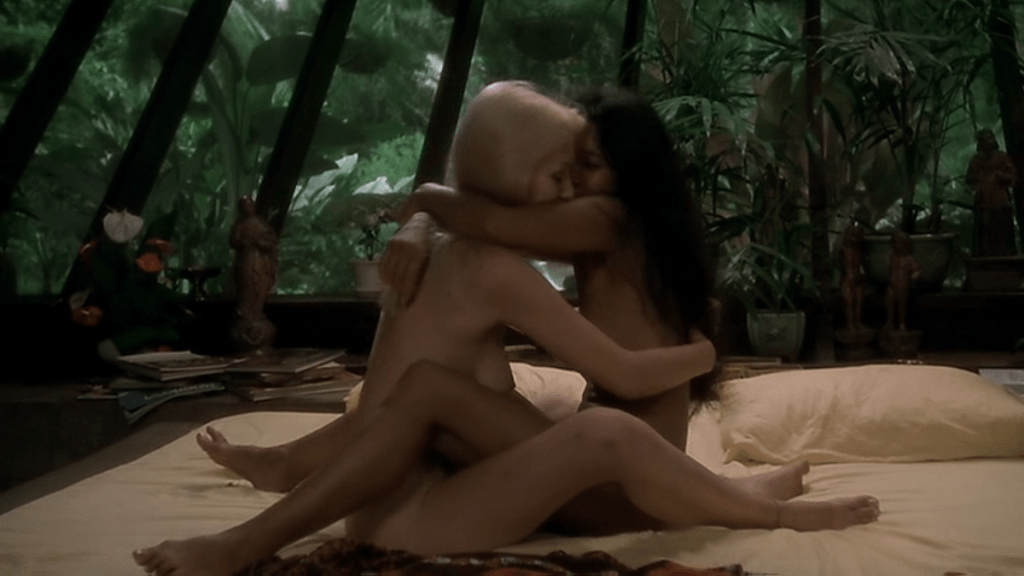
By the time of Laure‘s release, it had been almost half a decade since the hardcore phenomenon of Deep Throat, yet its star Linda Lovelace was still a household name, and a bankable enough one to essentially get the production of Laure off the ground. Lovelace was the first choice for the titular character of the film, but had been going through a newfound phase of religiosity, unbeknownst to producers Ovidio Assonitis and Harry Alan Towers when they hired her. According to Towers, he writes his autobiography that “in a forthcoming Federal trial of her co-star in Deep Throat, Harry Reems, Lovelace had agreed to give evidence for the prosecution and to protect herself, had decided that she could not appear in any erotic scenes.”
If you ask Ovidio Assonitis, Lovelace “was on drugs, she was crazy, and she was not an actress.” Apparently no one was sad to see her leave. The tragedy of Linda Lovelace was she could never escape Deep Throat; and that as eager as she was to move on, it was that very reputation which got her cast in the first place.3 After her departure from Manila, “the script had to be re-written,” writes Towers, “so that these scenes could be played by Annie Belle. As Annie’s new Italian boyfriend, Al Cliver, was also in the cast, Annie welcomed the opportunity.” Behind the camera, another problem was brewing for the Laure producers.
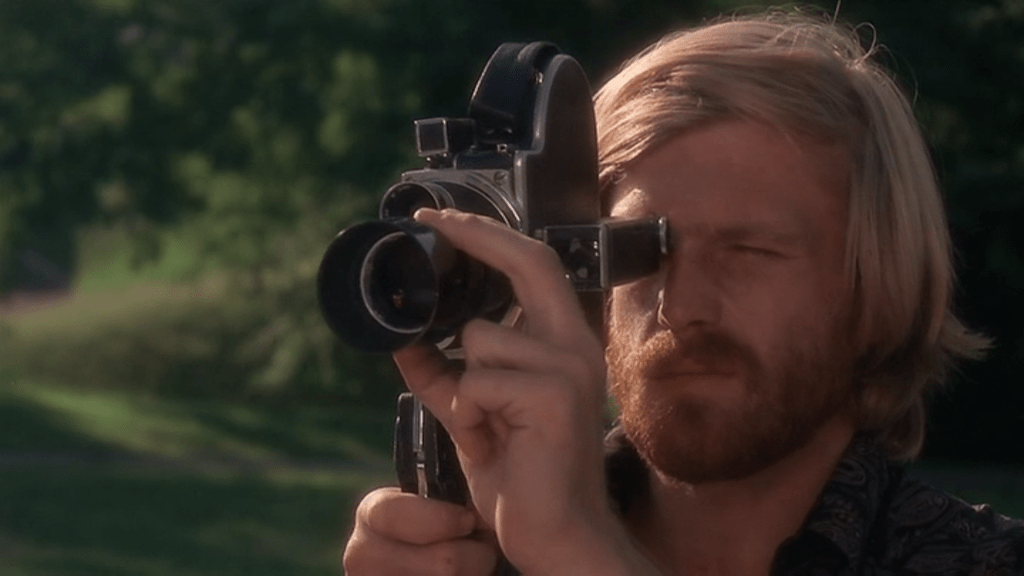
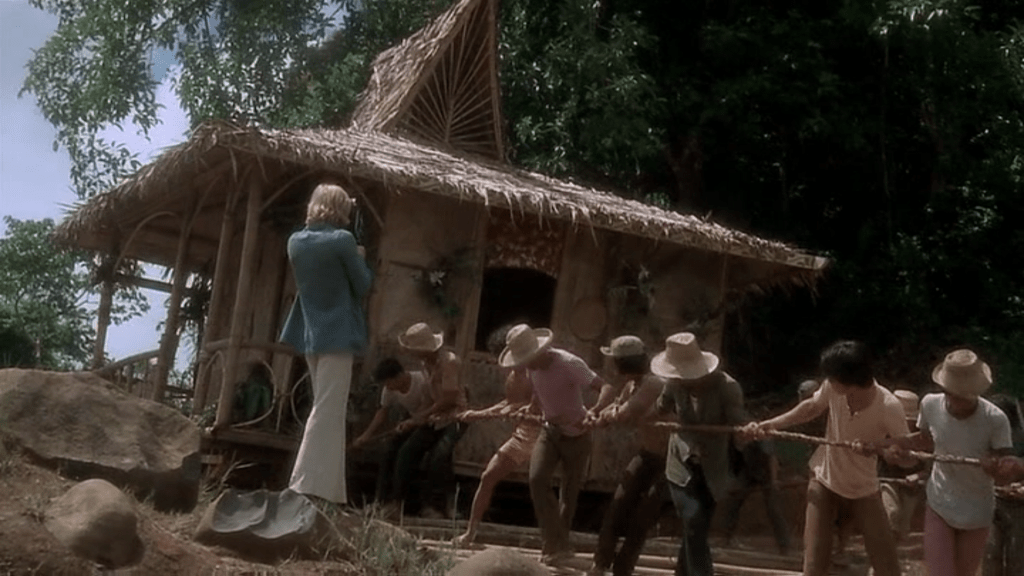

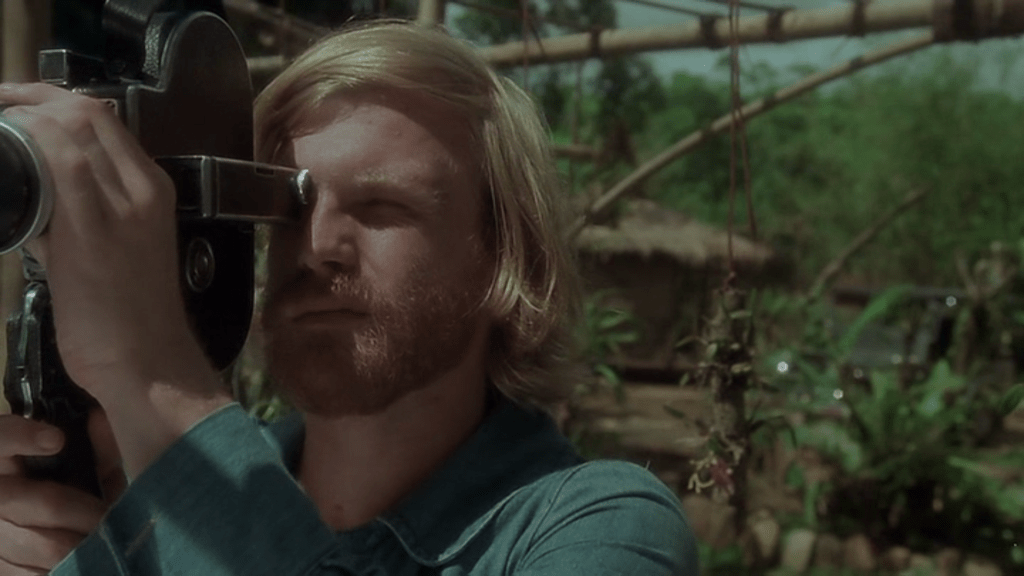
The question of who actually directed Laure is a knotty affair. The film is often credited to Arsan’s husband, Louis-Jacques, alongside Behind the Door cinematographer Roberto D’Ettore Piazzoli. This pairing makes sense on paper, as Louis-Jacques was not an experienced film director, and would need some guidance in such a large production. Apparently, neither of them were happy with the final product, for reasons unknown, and asked for their names to be removed, which lead Emmanuelle Arsan to gladly accept credit as director. I’ve read reports, and certain photos point to the fact that Arsan actually did do some of the directing herself, but at this point, it’s hard to say.
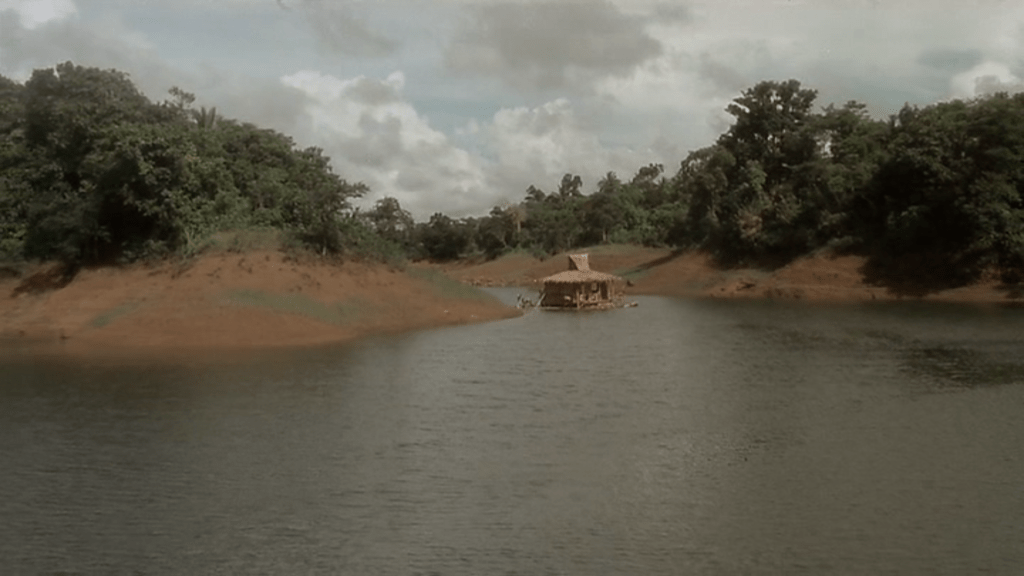
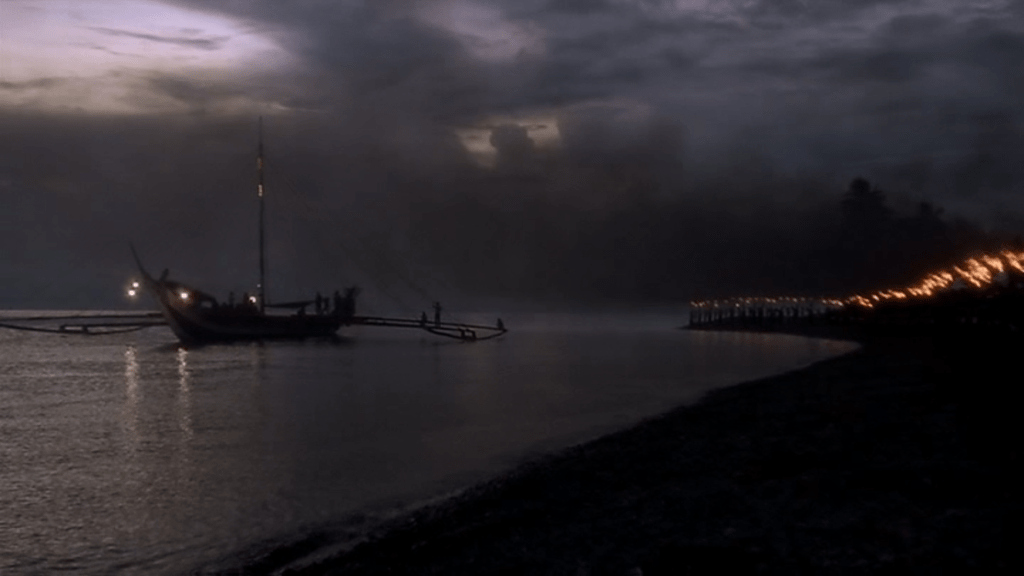
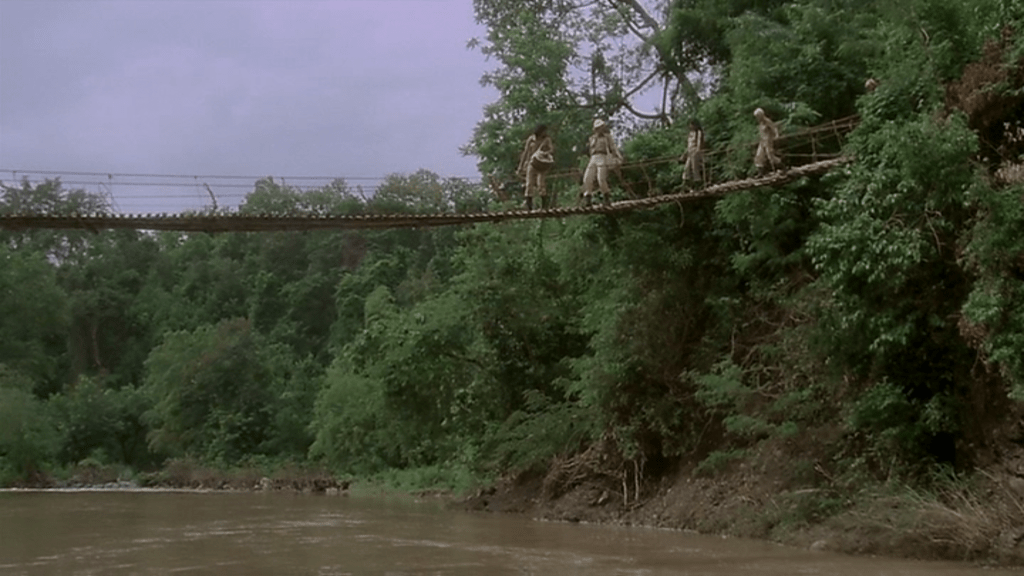
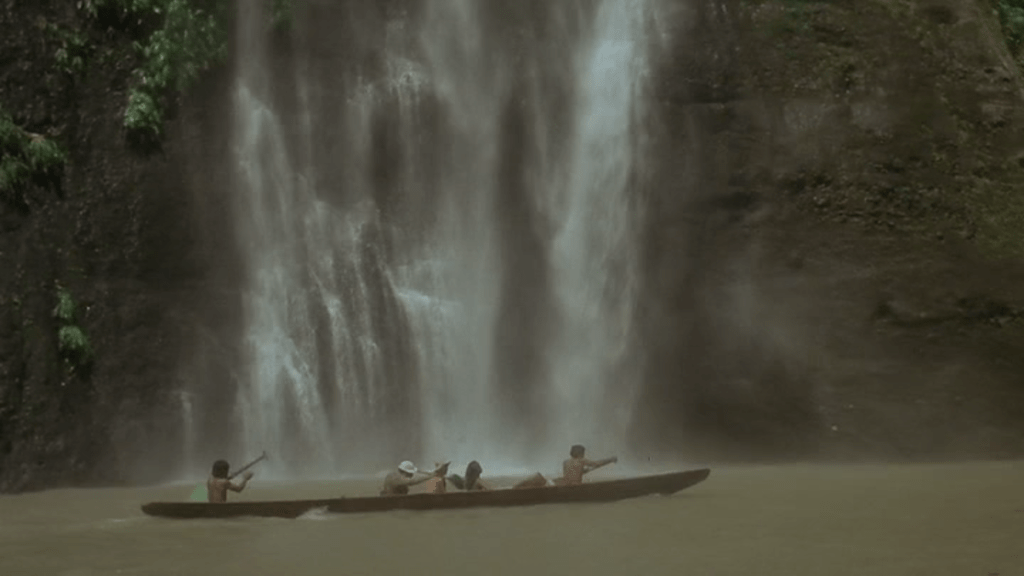
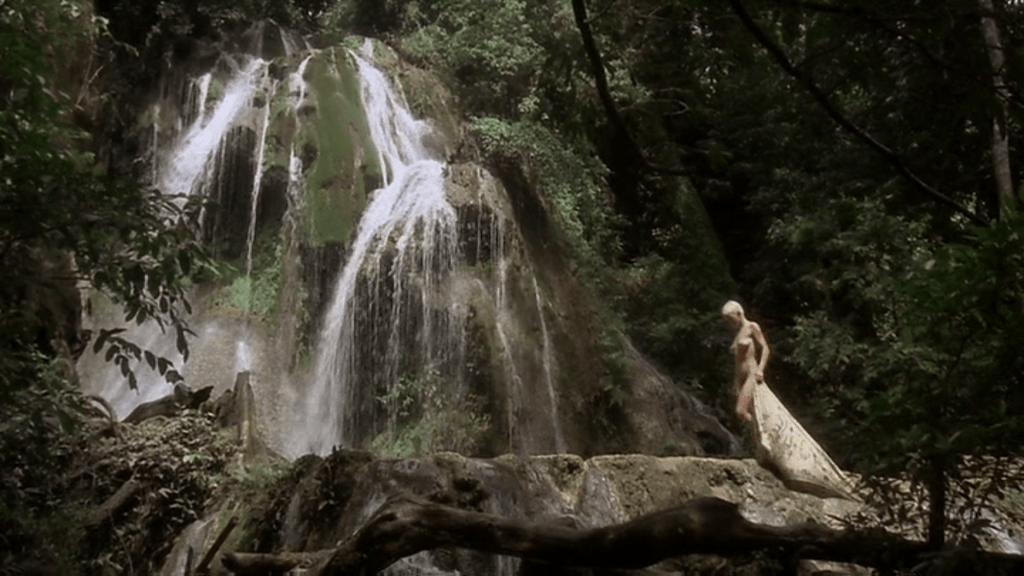

Everything about the troubled production melts away when you actually sit down and watch the film. Laure is a strange, beautiful, mysterious, and if you let it, haunting film. Gone is the travelogue aspect of Joe D’Amato’s Black Emanuelle films, as Laure takes place entirely in Manila and the island jungles surrounding it. D’Amato’s films often slide into the intentionally perverse; Laure is more interested in people talking about sex than actually having sex. Arsan’s goal of creating a less “sleazy” and more meditative take on her original Emmanuelle text won out. Arsan, who had done a little acting prior, appearing in a bit part for the American production, The Sand Pebbles, but was not a trained actor4, is the co-star of the film, a sort of omniscient narrator, a wise “native” woman who knows something about the ancient, special form of love that modern man has lost touch with.
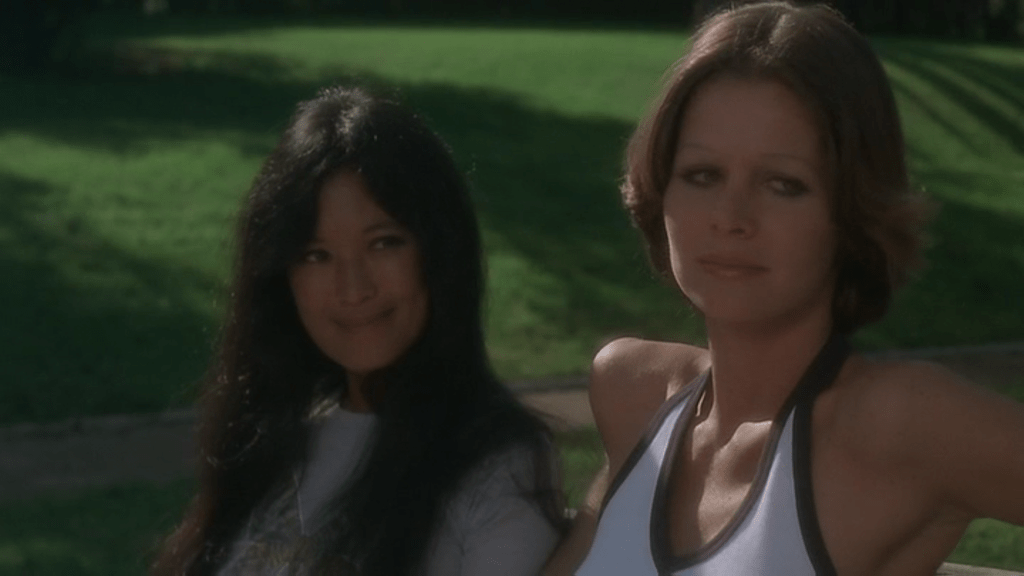
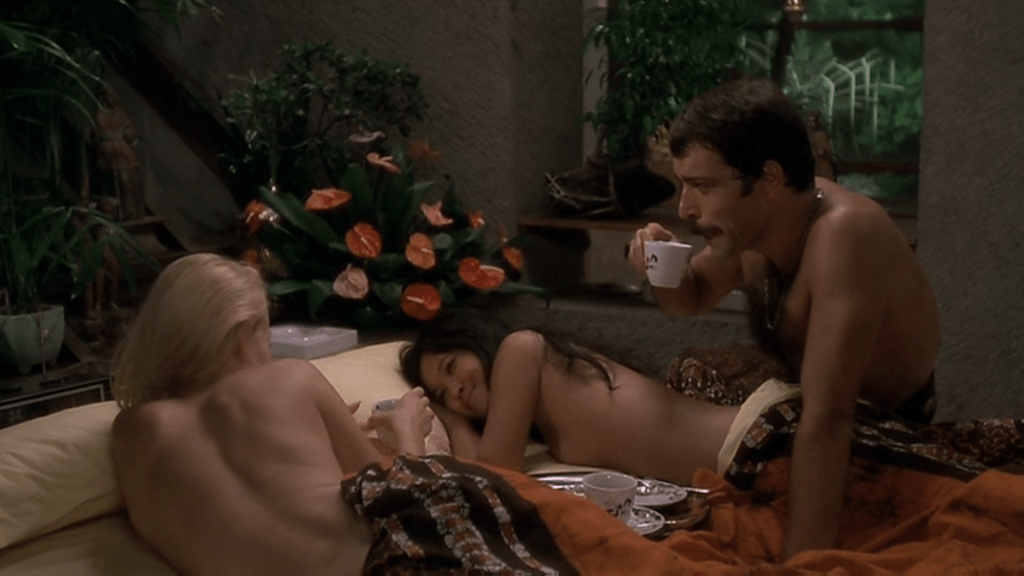
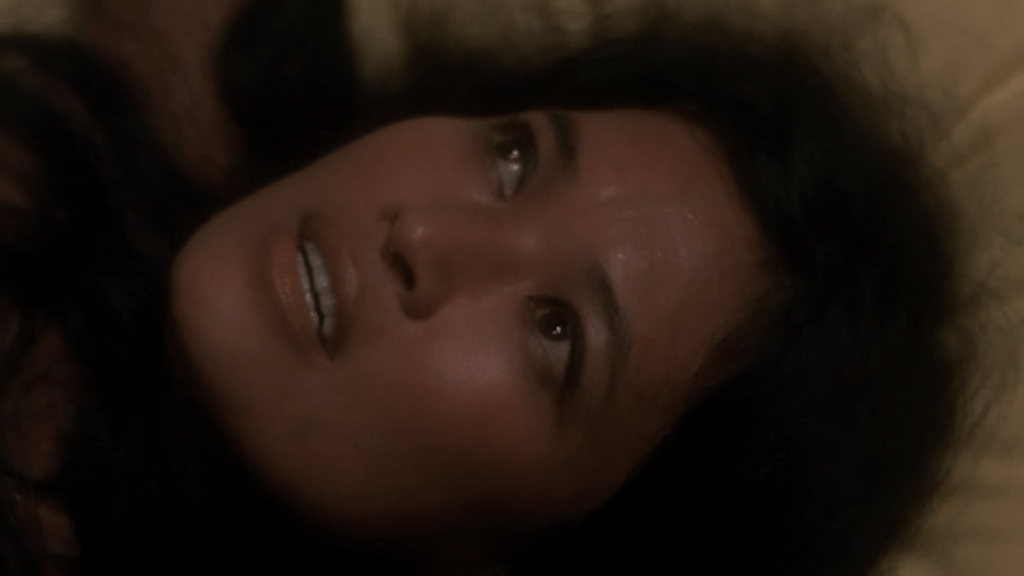
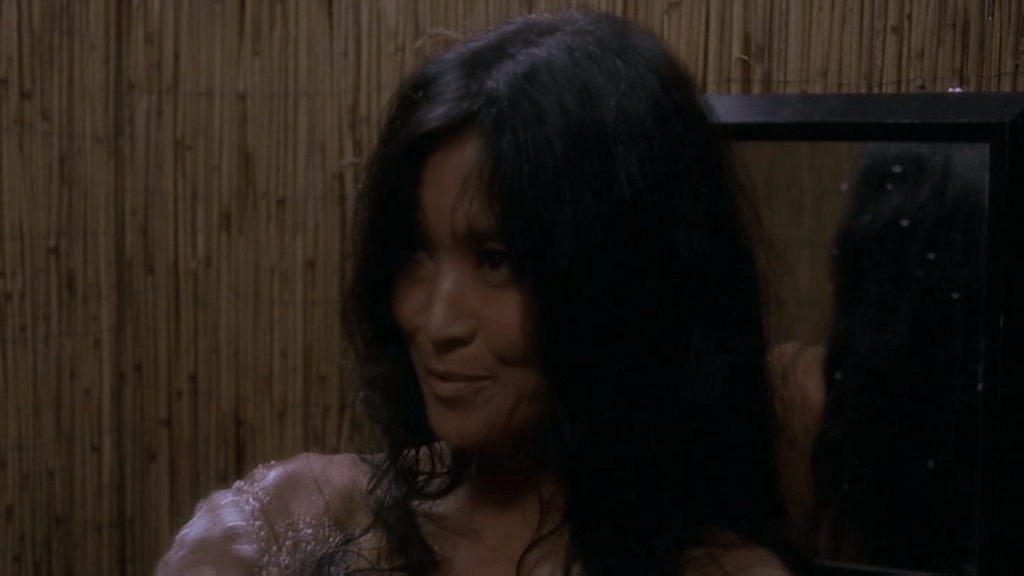
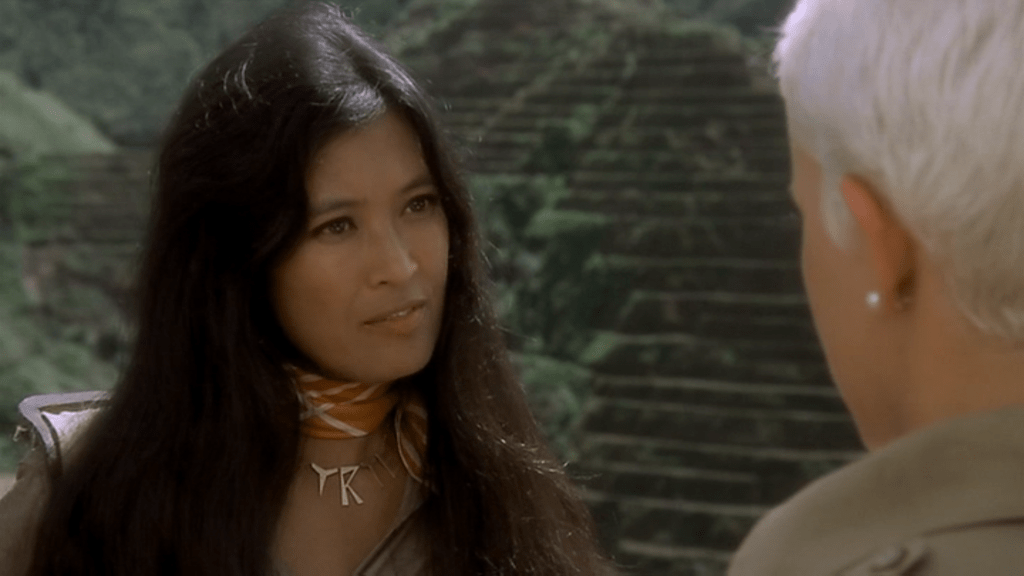
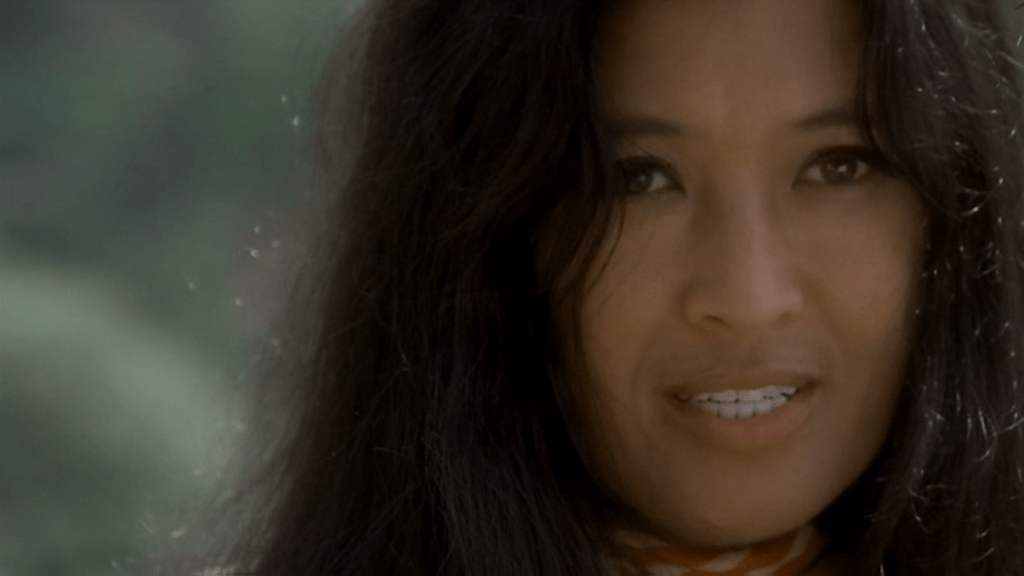
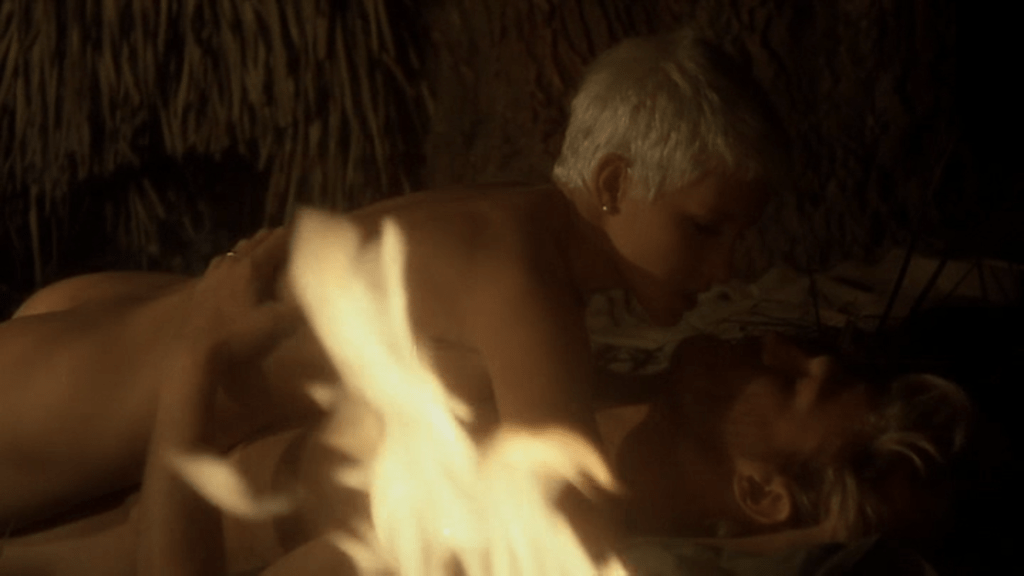
In her early 40s during the filming of Laure, Arsan looks uncannily like her Black Emanuelle counterpart, Laura Gemser, and you have to respect the author for being unafraid to put herself directly into the softcore erotic scenes lifted from her text. But let’s not forget the real star, ingénue Annie Belle, at the time, the real-life boyfriend to her male co-star, Al Cliver. Belle plays Laure, a free-spirited preacher’s daughter, who finds something like a soulmate in Cliver’s roving photographer, Nicholas, who discovers his own greatest pleasure is watching her in the throes of ecstasy, whether he’s physically involved in the pleasing, or not.
Belle and Cliver had their own heated romance, briefly playing Euro Cult “it couple” before the relationship imploded. They met a month prior to Cliver flying to the Philippines begin shooting Laure. They were living together in Italy at the time and Cliver was as surprised as anyone when Belle showed up on set as a replacement for Lovelace. Their off-screen romance comes across in their scenes together in the film; there’s a warmth to their interactions, and a knowing comfort in their embraces.
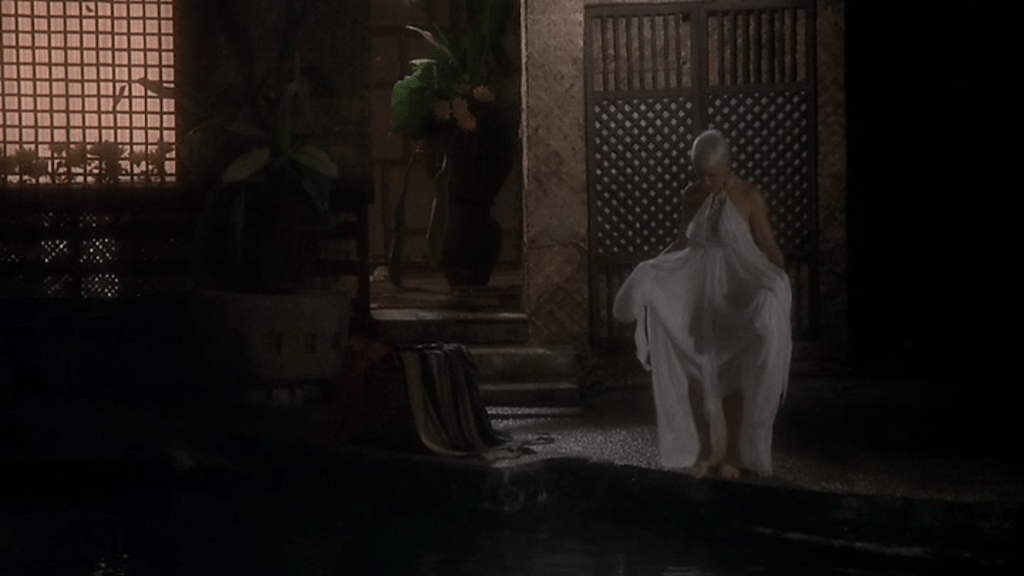
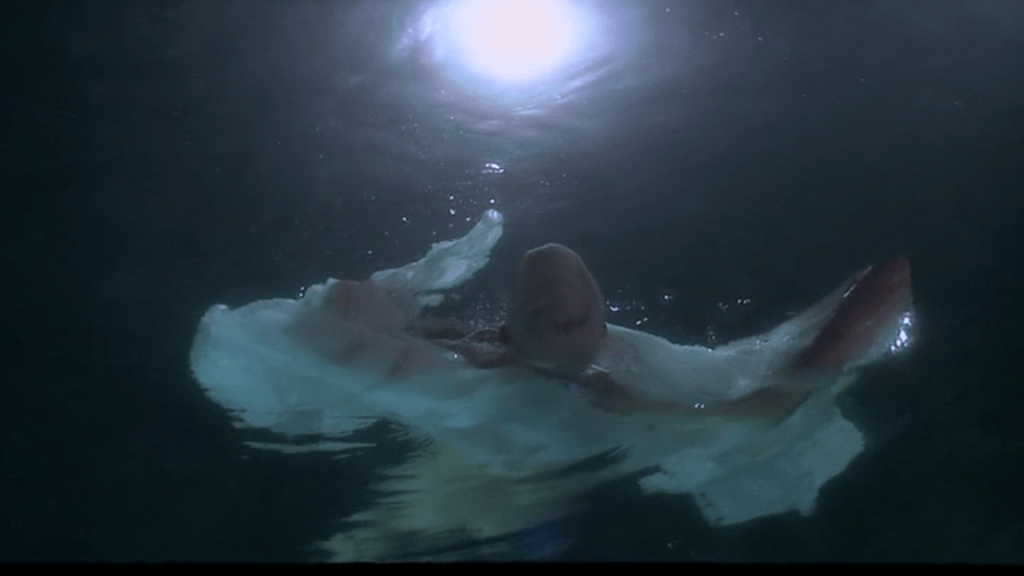
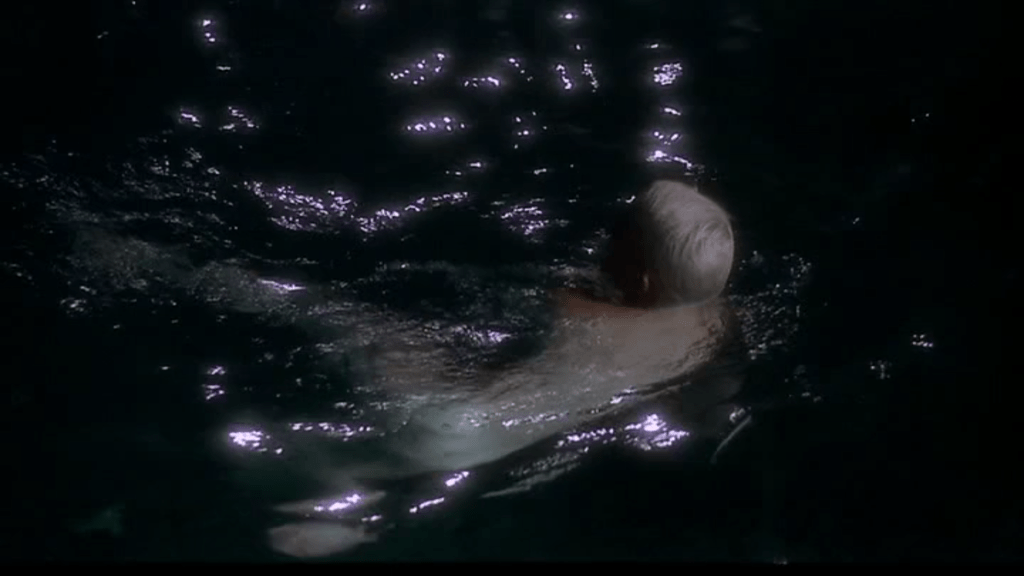
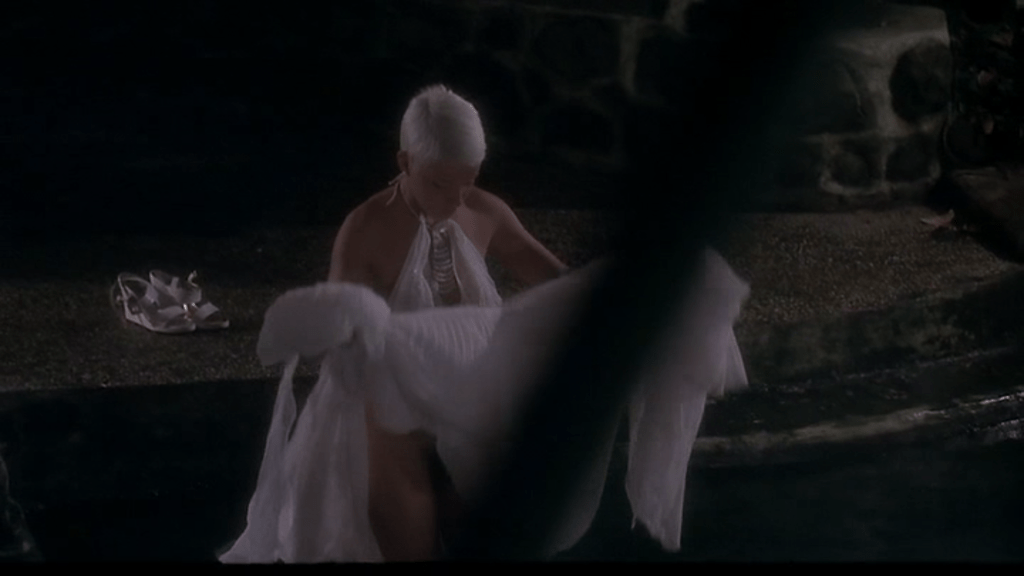
Annie Belle is an underrated actress, a unique, usually bleach-blond beauty that did some of her best work in a short two-year period. Laure is one of her strongest roles, effectively showing the arc of a woman possessed by the idea of a physical and spiritual freedom that is out of time, and out of body. And to add even more confusion to the Emmanuelle saga, she co-starred in the film Velluto Nero with the other black Emanuelle, Laura Gemser, the very same year that Laure was released..
Al Cliver will likely be a more familiar face to those who have watched any Italian genre films from the late 70s and 80s, as he collaborated with everyone from Lucio Fulci to Joe D’Amato to Spain’s Jesús Franco. He brings a certain rugged charm to the character of Nicholas, a role that could have easily come off as awkward in the hands of the wrong actor. Instead, his true love for Laure and genuine happiness at watching her find pleasure in the unconventional, is really sweet.
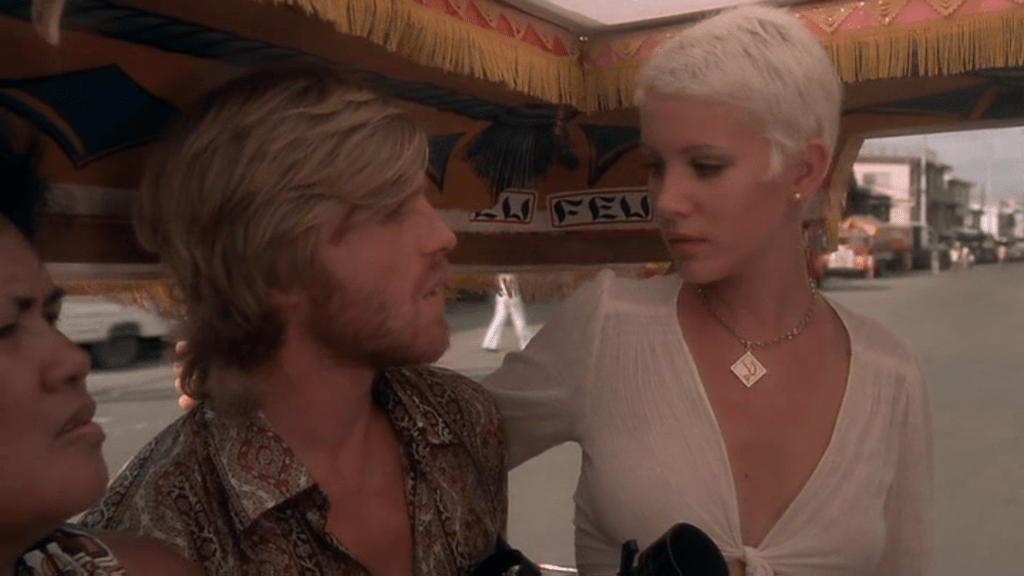
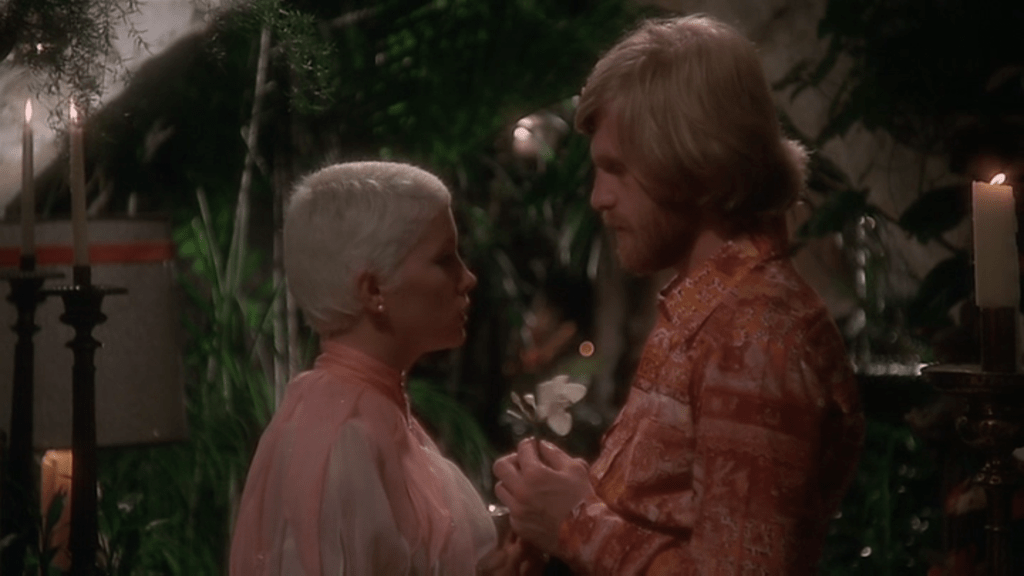
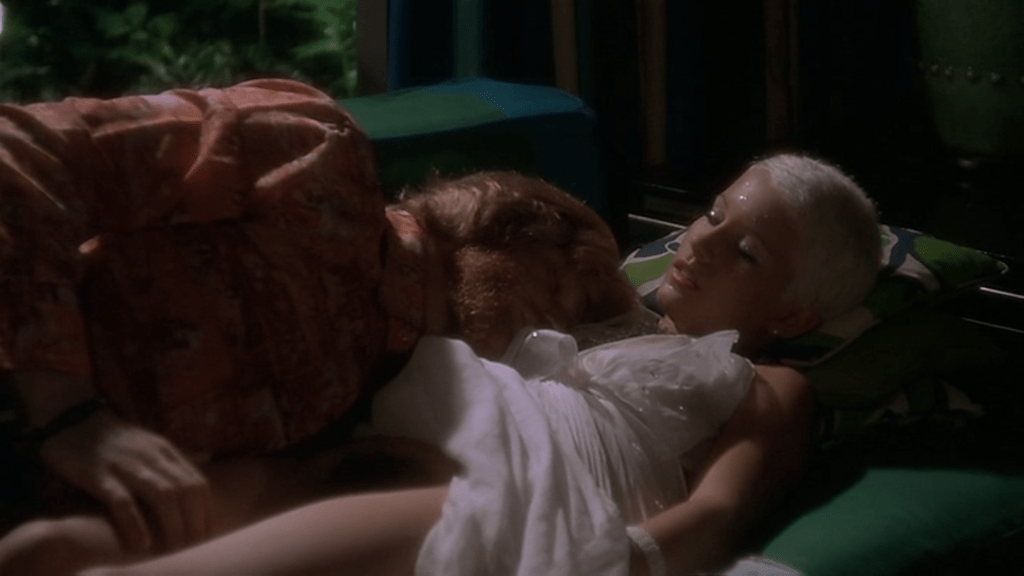
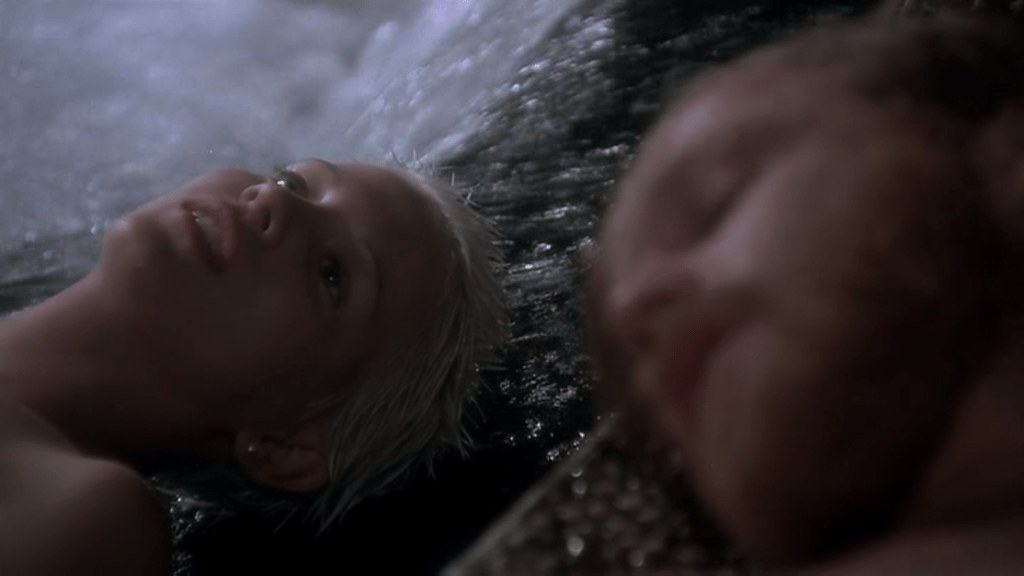
I understand that Laure is a hard sell the uninitiated, but I will continue to proselytize. I find it magical for the same reason that others will find it aimless. It’s a film content to drift along from one treatise on sexual freedom to the next, until the final act, when the team take a jungle adventure to find the Mara tribe, of anthropological interest because of their secret Ceremony of the New Sun ritual, a yearly rite where volunteers engage in mystical group sex that causes them to lose all memories of their past life and become birthed anew.
Laure is the only character to continue on, to see the journey through to the end, which is not actually an end, but a new beginning, as she is finally reborn as a nude goddess covered in silver dust. Although her character turns back at the last moment, choosing not to intrude on the Mara’s sacred ceremony, Emmanuelle Arsan’s voiceover is fully supportive of Laure’s choice, suggesting we each have our own paths to sexual self-determination:
“We are all born into bondage. To break our chains is only a beginning. We shall forever have to ask ourselves: What shall I do with my freedom?”
Special thanks to the annie belle fan blog. Laure was released on DVD by severin films in 2007. it is currently out of print.
- Henceforth, when referencing Marayat Bibidh, I will use her pen name, Emmanuelle Arsan, for clarity. ↩︎
- One thing that’s in the novel and definitely not in the film is the extended jungle diversion in which Laure has sex with a lubricated, “ithyphallic” tree. ↩︎
- In her autobiography, <i>Ordeal</i>, Linda Lovelace writes that the script was altered after she signed on: “It went from a beautiful thing to pure sleaze. It had me going to bed with twelve different people. It had me masturbating with camera lenses. Being with lesbians. Yecccchh!” ↩︎
- Assonitis described Arsan as not an actress but “a symbol.” ↩︎
 Gentry Austin
