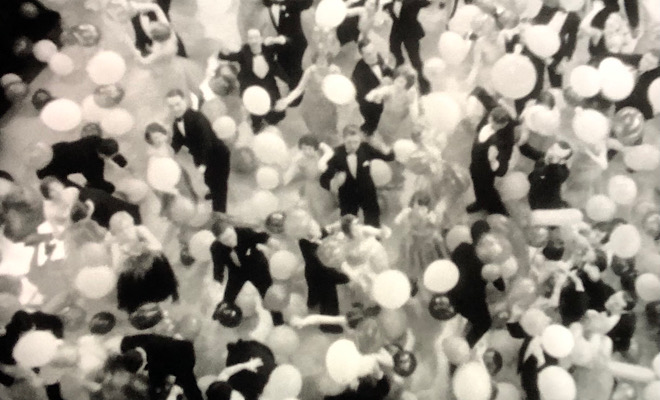


The years between 1928 and 1930 saw the release of three films starring fresh-faced Hollywood actress Joan Crawford playing a “flaming youth” jazz baby. She was paired with a rotating cast of male co-stars, from Johnny Mack Brown to Douglas Fairbanks Jr. to Rod La Rocque to Robert Montgomery. Her most frequent female co-star was Anita Page, who appeared in all three films. Dorothy Sebastian appeared in two. The films form a loose trilogy focused on flapper era youth, or, what the in-film news articles call “members of the younger set.” The themes across the three films are largely the same: marriage for love, societal pressures, parental expectations and the rapidly evolving sexual morality amongst the young adults of the pre-Depression era. I’ve come to call this collection of films The Our Triumvirate as they all share the possessive pronoun along with two other words, forming a title of three words, and more often than not, featuring three leading ladies.
Let’s take a brief look at each film, in chronological order:
Our Dancing Daughters
(1928, directed by Harry Beaumont)


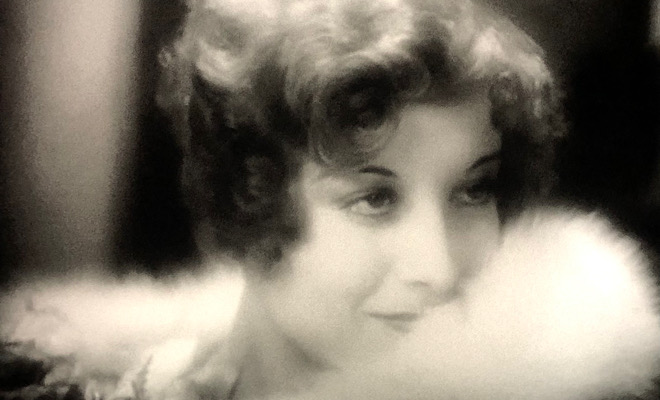

Format: Silent with synchronized soundtrack
The Girls: Joan Crawford, Anita Page, Dorothy Sebastian
The Boys: Johnny Mack Brown, Nils Asther
Supporting: Kathlyn Williams, Edward Nugent
“This was my turning point. None of us were starred in the picture, but theater owners, sensing the audience response, ‘starred’ me. My name went up on their marquees and I’d drive around with a small box camera taking pictures of “Joan Crawford” in lights.”
— Joan Crawford, A Portrait of Joan
The first marquee film with Lucille Fay LeSueur’s new, contest chosen name in bright lights. She plays a flapper daughter with snappy parents—mother with “so vicious” perfume (“you’re too young to use such perfume—I’ll take it”). Father drinking in the drawing room with the boys. This being 1928, it’s art deco everything, and everything revolves around the Yacht Club, the Riding Club and finding a wealthy husband.
Wild Diana (Crawford) is introduced not by dancing, but by sipping from all the boys’ glasses, and toasting to herself (“I have to live with myself until I die—so may I always like—myself!”). But soon enough she’s the Crawford from the tabloids—table dancing and stage diving. She has her eyes set on the handsomely make-up’d Ben Blain of Birmingham: a former half-back and current inheritor to millions (played by John Mack Brown, who was an actual UA alum and star football player). She sexually teases him, begging for…a cigarette.
Diana’s best gal pal, Bea (Dorothy Sebastian) hints at a traumatic past. A broken heart or something more reputation tarnishing? She tells her beau, “Before I met you, Norman—before I knew anything about love—things happened.“ She tells Norman everything, he accepts her, and they are happily married in a quiet ceremony. This makes Diana even more devastated that her paramour is currently betrothed to another via trickery.
That “another” is gold digging rival, Ann (Anita Page) who doesn’t drink, she inhales. “Beauty—and—purity,” she mocks. “But after I’m married, won’t I have a fling!” In a bid for Ben’s affections, she paints Diana as a free loving slut, unworthy of his love. But in her most revealing moment of true colors, she drunkenly berates three older women who are on their hands and knees cleaning up her mess from the previous night’s party: “Women—women—working! Haven’t you any daughter—pretty daughters?” She effectively says the quiet part loud, giving away her thoughts not only on her own gender, but on herself, as something to be bought and sold.
The crux of the story here is that Diana might have a wild child exterior, but she doesn’t care about Ben’s millions, only his heart. She’s a flapper with ambition and dreams. She wants to catch sunlight in the cup of her hands. She wants to live life until she, or it, is spent. Her body literally trembles from head to foot at the thought of it. She is the epitome of the newly christened “Joan Crawford.” Even the intertitles sound like something she would say, when she was allowed to say it with her own voice: “there isn’t a decent thought in your nasty little mind.”
Our Modern Maidens
(1929, directed by Jack Conway)


Format: Silent with synchronized soundtrack
The Girls: Joan Crawford, Anita Page
The Boys: Rod La Rocque, Douglas Fairbanks, Jr.
Supporting: Edward Nugent, Josephine Dunn, Albert Gran
“I was the one person in 1929 made a star without a talking picture. Top executives were so busy worrying about what would happen to Garbo, Shearer and Gilbert, they had no time to worry about me.”
— Joan Crawford, A Portrait of Joan
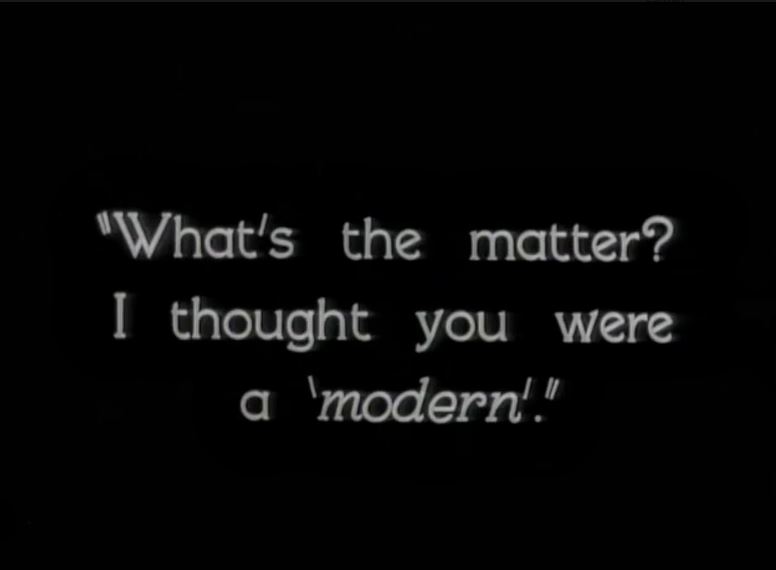
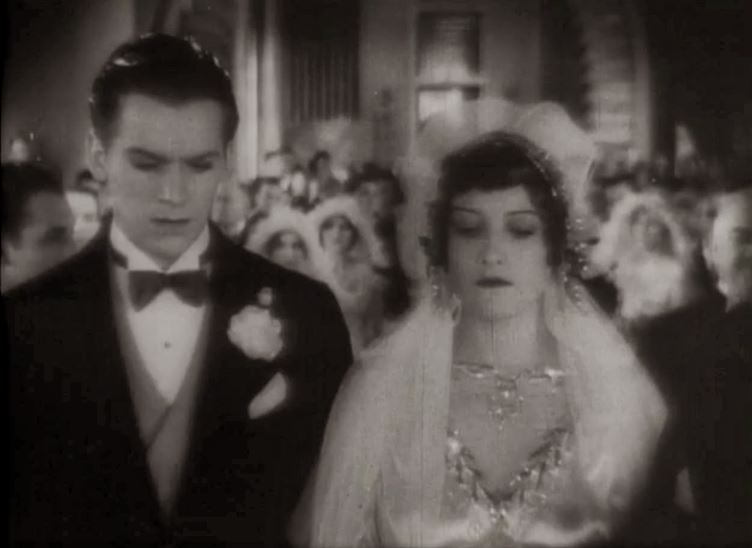
What Crawford called “further adventures of the dancing daughters.” This being a loose sequel, MGM knew they needed to up the ante, which means more Charleston and not one, but two, diplomatic love interests. There’s even a hot topic pregnancy scare subplot and wedding annulment. There’s also an unfortunately glib intertitle from the mouth of Joan Crawford’s Billie Brown to boyfriend, Gil Jordan (Fairbanks): “I’ll get you to Paris if I have to start another war.”
Crawford was thrilled that husband Douglas Fairbanks Jr. was going to appear in the follow-up to her big, breakout film (“the climax to our year-and-a-half-courtship. What a lark!”). She began to more closely study the rushes: how she moved, how she walked, how she sat. She was proud of her solo dance scene in a costume by Adrian (“my first”), and the scenes where Fairbanks impersonated John Barrymore, John Gilbert and Douglas Senior (“these impersonations stand up today”).
But if you ask me, it’s a bit of a sophomore slump in the Our Triumvirate. The one that feels a little too knowingly self-referential, with the youth set staying out ‘till 4AM racing in topless cars, swooning in the moonlight and mocking the arm-on-the-forehead dramatics of early silent films. There’s an obvious flippancy to Fairbanks Jr. thumbing his nose at his own father’s performance in Robin Hood. The kids are not alright. They are kind of little shits! They’re digging in each others’ pockets…for engagement rings. They’re saying farewell (and fuck off) to the old era. And they’re saying hello the new: synchronized sound and midriff-baring, snare drum-banging, Joan Crawford.
There’s certainly some voyeuristic joy in watching our IRL newlyweds—Douglas Fiarbanks Jr. swallowing the kisses of motor magnate daughter Joanie Crawford—but the real centerpiece of the film is actually between Crawford and Rod La Rocque—alone together in a secluded cabin, escaping the storm outside, sopping wet and trying their best not to do anything indecent. It’s a wild little scene with Crawford playing all the emotions: frightened, sulking, aroused, embarrassed. The recurring theme throughout the Our films is Crawford’s character playing the modern (i.e. “easy”) young woman, but her persona largely being an act to hide deeper emotional problems and insecurities. This scene perfectly captures that burden, and gives Crawford one of her best moments of pure acting in the entire series.
As the title notes, these are the new, modern girls and boys, but they still feel confined by their predecessors. They’re pushing back as hard as they can on unhealthy expectations due to their sex and their breeding, but ultimately true love does win out in the end. In a summation of the film’s ethics, the catty rival played by Josephine Dunn asks the newly married Diana, who has just declared she is planning a groomless honeymoon, “Do tell us…is this a modern moral…or just another immoral modern?” The answer, we are led to believe, is “yes, both,” despite the actual response being, “Do you think you’d know the difference, darling?”
Our Blushing Brides
(1930, directed by Harry Beaumont)


Format: All talking picture
The Girls: Joan Crawford, Anita Page, Dorothy Sebastian
The Boys: Robert Montgomery, Raymond Hackett, John Miljan
Supporting: Hedda Hopper, Albert Conti, Edward Brophy
“Photoplay named [Our Blushing Brides] ‘the best performance of the month,’ as they had similarly honored most of my dancing daughter roles. But personally, I had wearied of the part—to me it was totally passé.”
— Joan Crawford, A Portrait of Joan
Despite this being the first all talking picture in the Our Triumverate, the opening credits to Our Blushing Brides declare it as a return to Dancing Daughters form. We finally have The Three Girls back together: Crawford, Page and Sebastian (billed in that order). This time they get an equal number of boys: Robert Montgomery, Raymond Hackett and John Miljan. What immediately sets this film apart from the others is that the girls are of meager means this time around. No more yacht clubs and lavish, art deco marriage ceremonies, instead they are punching the clock, fighting for the shopgirl mirror, modeling swimwear and sharing a cozy two-room apartment. Welcome to the pre-code, girlies!
More than the other films, Blushing Brides greatly benefits from having a charismatic lead in Robert Montgomery as Tony Jardine, doing his typically pushy shtick, both off-putting and attractive, and with his own absurdly designed treehouse (“I’m mad about the beauties of nature”). The film feels overlong at 99 minutes, with a lot of the runtime in the first half padded with faux-Busby Berkeley fashion shows and lingerie modeling (not complaining), but overall it’s a treat just to have the girl gang back together.
The tone quickly changes in the second half, where The Three Girls get involved with some mostly bad boys (criminals, cheaters, the aforementioned Robert Montgomery). Fans of the first two films might be turned off by how downbeat things become, but it’s par for the course as the nation was in the midst of the Great Depression. The first half is escapism, the second half a reflection of the times.
Things go badly for all our girls, and only one, Jerry (Crawford), comes out mostly unscathed. Her armor is an unflappable cynicism that keeps her several arms length from all men. Watching Crawford, with fiery tongue, refusing the advances of Montgomery for the majority of the runtime, is catnip for those that like their romantic overtures heavier on the push than pull, but the film sometimes feels bogged down in women-in-peril-isms.
Instead of a triumphant, orchestra swelling finale to the Our Triumvirate, the ending comes off as somewhat condemnatory of our easily deceived young post-flapper girls—who are apparently unable to make the “right” decisions in their lives without the help of an honest man. On a lighter note, I imagine Jerry and Tony had a lot of fun in that treehouse.
Our dancing daughters has been recently restored and relased on blu-ray through the warner archive collection
 Gentry Austin